 EN
EN English
 中文简体
中文简体 Español
Global polymer demand now exceeds 400 million metric tons per year, yet recycled feedstock still supplies less than 10 percent of that volume. That gap defines the tension in new material technology: manufacturers need lower mass, longer service life, and a defensible carbon profile from cost-sensitive, certification-heavy supply chains.
This guide translates current global trends in new material technology into concrete decisions for R&D, engineering, and procurement teams, covering the polymer families, qualification practices, and supplier capabilities that separate reliable programs from expensive delays through 2026.
Global Trends in New Material Technology: Four Demand Shifts for 2026
Four demand shifts dominate the current agenda: lightweighting, circular feedstock, high-temperature stability, and data-driven qualification. Each has hard market data behind it, and each changes how compounds get specified and purchased.
USD 339.8BLightweighting materials market projected by 2030
4.30M TBio-based polymer volume expected by 2031
USD 169.62BSmart materials market forecast by 2034
7.2%Global circularity rate recorded in 2023
The implication: buyers are not swapping one resin for another. They are replacing metal parts, cutting process energy, and restructuring agreements around certified performance.
Every major global trend in new material technology rewards the supplier that can prove consistency at scale.
Lightweighting Is Redefining Metal-to-Plastic Conversion Targets
Metal-to-plastic conversion now reaches into industrial robotics, pump housings, and conveying equipment, where removing 1 kg from a moving assembly cuts energy consumption over millions of cycles. Structural polyamide compounds carry most of the workload.
PA66-GF30 reaches a tensile strength around 180 MPa, and a PA66-GF50 grade adds dimensional stability for large parts. Where sliding contact is involved, internally lubricated POM compounds resist wear better than metal because they embed abrasive particles instead of scoring a mating shaft.
| Material | Density (g/cm3) | Tensile strength (MPa) | Part cost index | Corrosion behavior | Damping |
| Die-cast aluminum | 2.70 | 230 | 1.0 | Anodizing needed | Low |
| PA66-GF30 | 1.37 | 180 | 0.8 | Intrinsic | Moderate |
| Metal-replacement POM | 1.41 | 70 | 0.7 | Intrinsic | High |
| PEEK-CF30 | 1.40 | 240 | 8.5 | Intrinsic | Moderate |
Weight reduction potential versus steel, by polymer family
PEEK-CF30est. 65%
POM replacementest. 58%
PA66-GF30est. 45%
PPS-GF45est. 40%
For a manufacturer converting a component from die-cast aluminum, a high-strength PA66 compound is normally the first candidate evaluated.
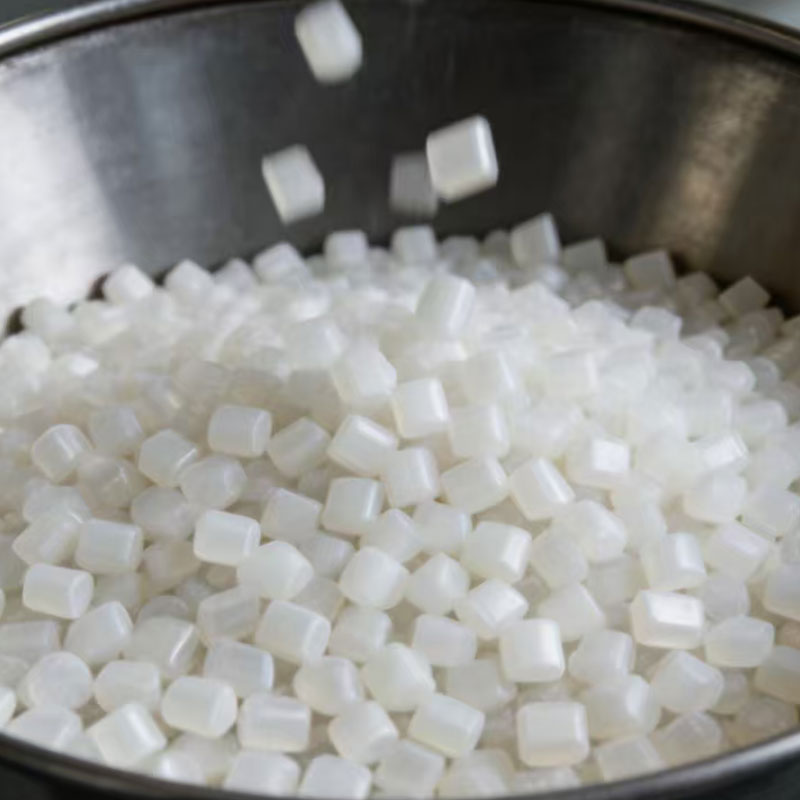
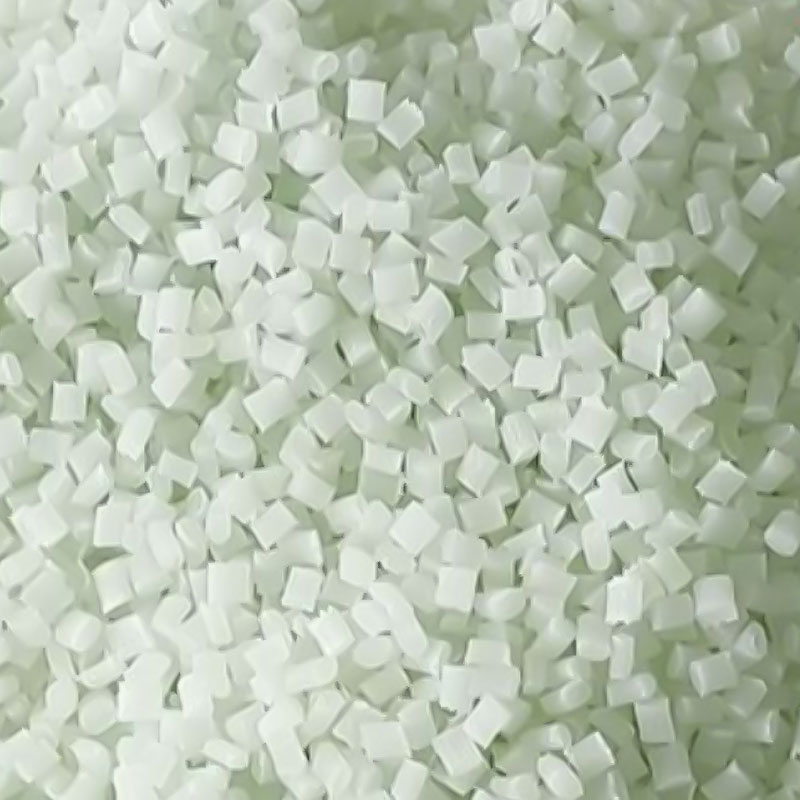 High-Strength Glass-Fiber Reinforced PA66 Compound for Metal ReplacementThis PA66 with 30% glass fiber offers significantly improved strength, rigidity, and heat resistance, making it a cost-effective candidate when converting components from die-cast aluminum while meeting growing recycled-content requirements.View Product →
Every kilogram removed from a moving industrial part saves recurring energy cost for the life of the machine. Lightweighting survives economic downturns for exactly that reason.
Circular Polymers Move from Regulatory Obligation to Specification
Recycled content is now a contractual requirement in the EU and North America for consumer durables, electronics, and automotive programs. Extended producer responsibility fees and packaging rules penalize virgin-only design, and GRS certification has become a standard line in request-for-quotation documents.
Supply is the bottleneck. The global circular economy rate fell to 7.2 percent in 2023 because collection and purification capacity cannot keep pace with brand-owner commitments. Compounders that secure certified recycled feedstock gain a structural advantage.
- Certified PCR content with a traceable mass balance
- Retained mechanical properties after multiple reprocessing cycles
- Consistent color and flow behavior across production lots
- Regulatory documentation matched to the target end-market
Without certification, a recycled-content claim fails the audit - and supplier audits are now part of standard onboarding.
High-Temperature Stability Climbs the New Material Technology Agenda
Continuous service temperature, not peak melting point, decides whether a plastic survives in battery housings, electric motor components, or semiconductor fixtures. Standard PA66 tops out near 85C, PPA-GF30 near 120C, PPS-GF45 at 180C, and PEEK-CF30 past 250C.
| Polymer grade | Continuous service (C) | Tensile strength (MPa) | Creep rating | Chemical resistance | Cost index |
| PA66-GF30 | 85 | 180 | 2 of 5 | Moderate | 1.0 |
| PPA-GF30 | 120 | 210 | 3 of 5 | Good | 1.6 |
| PPS-GF45 | 180 | 190 | 4 of 5 | Excellent | 2.2 |
| PEEK-CF30 | 250 | 240 | 5 of 5 | Excellent | 9.0 |
These gaps translate directly into wall thickness. A part holding tolerance at 150C needs thicker walls in PPA or a stiffer PPS compound. At the extreme end, carbon-fiber-reinforced PEEK provides the creep resistance needed for pump rotors and compressor seals.
Manufacturers planning service above 180C should review what makes PPS compounds suitable for demanding service before finalizing a grade.
Where the service profile sits near 180C with sustained mechanical load, a 45 percent glass-filled PPS compound is the strongest conventional choice.
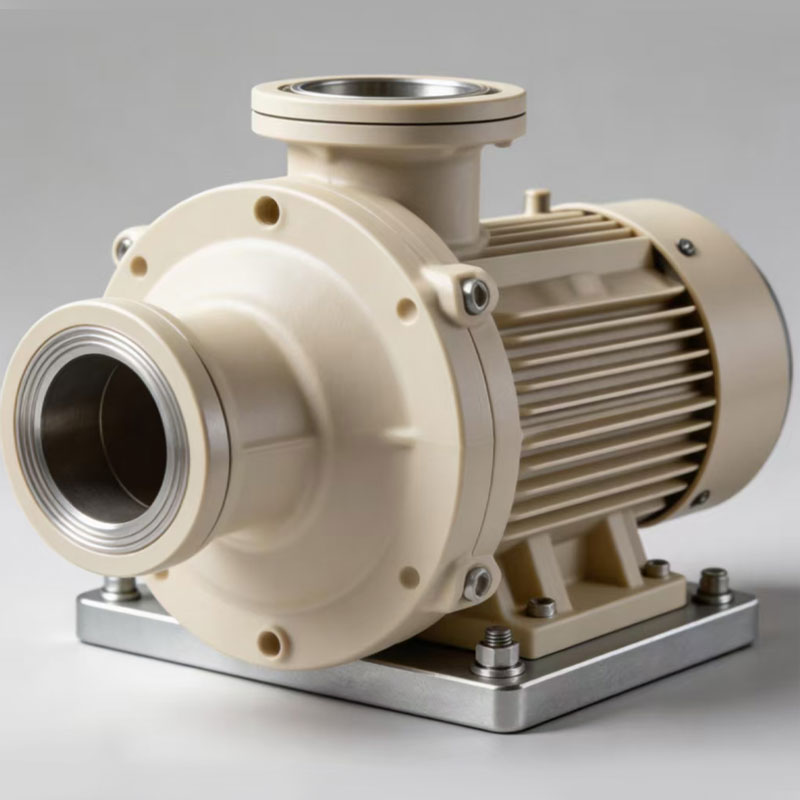 45% Glass-Filled PPS Pellets for Continuous High-Temperature RigidityWith 45% glass fiber reinforcement, this PPS compound delivers high stiffness and dimensional stability for sustained mechanical loads near 180°C, positioning it as the strongest conventional choice before moving to carbon-fiber PEEK.View Product →
For continuous duty beyond 200C under load, a carbon-fiber-reinforced PEEK compound is the specification that survives validation.
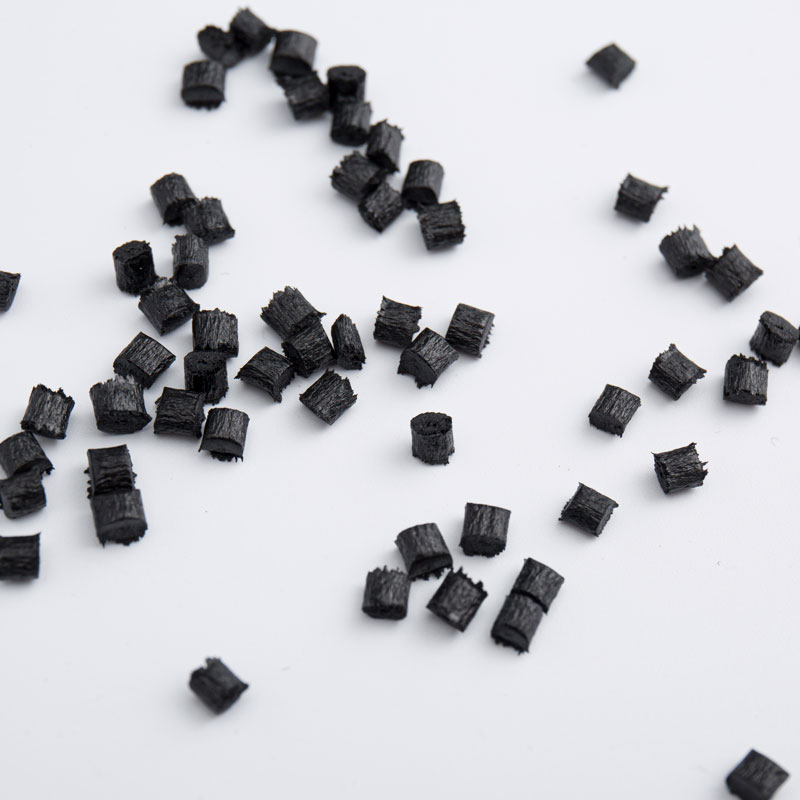 Carbon-Fiber-Reinforced PEEK for Extreme Load and Temperature StabilityThis PEEK with 30% carbon fiber provides superior rigidity, wear resistance, and dimensional stability for continuous duty beyond 200°C under load, with lot-level data enabling faster qualification and sourcing decisions.View Product →
Price per kilogram is the wrong metric for high-temperature polymers. Compare cost per part per hour of service life; PEEK becomes economic in applications that fail in PPS within months.
Qualification Data Is Reshaping New Material Technology Supply Decisions
Qualification timelines are compressing because compounders with lot-level data allow engineers to simulate before they cut steel. A process that once required 12 to 18 months of physical testing can reach a sourcing decision in 8 to 12 weeks when the supplier publishes full mechanical, thermal, and rheological data for every batch.
Data quality is the hidden variable in every material transition. Engineers need modulus at temperature, not just a single ISO number. Molders need viscosity curves. Procurement needs lot-to-lot consistency.
- ISO or ASTM values with the full test conditions stated
- Mechanical data at multiple temperatures, including 60C and 120C
- Rheology curve for the specific molding machine in use
- Lot-level Cpk values for the controlling properties
A capable compounder supplies these data before the first trial, not after the second incident. That is the difference between a lab grade and a production grade, and it explains why processors are choosing modified PA pellets over commodity grades.
A material is only as good as the consistency of every pellet. Batch variation, not the datasheet, is the leading cause of failed metal-to-plastic conversions.
Procurement Criteria for the Next Material Cycle
Buyers who evaluate a compounder with financial counterparty rigor reduce technology risk more effectively than buyers who optimize on resin price alone. The compounder certification stack is the evidence that matters.
Zhejiang Lisu Composite Materials Co., Ltd. operates with this model: a national high-technology enterprise with IATF 16949 certification, GRS-certified recycled material capability, and a documented path from formulation design to mass production. Those credentials support what affects a program: consistent batches, compliant recycled content, and a clean audit trail.
- Quality system certification such as IATF 16949
- Recycled-content certification such as GRS
- A documented formulation-to-production scale-up path
- Annual capacity that matches the multi-year order horizon
- A defined root-cause loop for failure analysis
The compounder relationship is a design variable. Involving the compounder before mold design removes the most expensive class of troubleshooting iterations.
Frequently Asked Questions
What are the most important global trends in new material technology for industrial buyers?
The four trends with the largest procurement impact are lightweighting, certified circular feedstock, high-temperature grades for electrification, and data-driven qualification. All reward suppliers who prove consistency and traceable data.
Why does certified recycled content matter more than a recycled-content claim?
Audits and extended producer responsibility regulations require traceability. A GRS certification proves the feedstock path; an unverified claim exposes the buyer to compliance risk and re-qualification cost.
Which polymer should be specified for continuous service above 150C?
Above 150C, standard PA66 and PBT drop out. PPA handles about 120C, PPS-GF45 reaches 180C, and PEEK compounds perform beyond 250C. The final choice depends on the chemical environment and the mechanical load, not on temperature alone.
What makes a compounder a reliable partner for new material technology projects?
Certified quality systems, a documented formulation-to-production path, lot-level data, and proven scale. Without those, even a correct formulation will fail in production.