 EN
EN English
 中文简体
中文简体 Español
Switching a water-pump impeller from aluminum to carbon-fiber-reinforced PEEK cut unit weight by 62 percent and stretched service life past 20,000 hours, yet the identical compound failed within weeks when a caustic washdown chemistry attacked the polymer matrix. That contrast captures the real state of high-performance materials in 2026: the performance ceiling keeps rising, but every gain carries a trade-off a designer must understand before approving a specification.
High-performance materials are polymer systems and composites that retain structural integrity at continuous service temperatures above 150°C, resist aggressive chemicals, and maintain mechanical properties under sustained load. They sit one tier above conventional engineering plastics, in a hierarchy defined by long-term temperature index, creep resistance, and certification rather than by a single tensile-strength number.
What Actually Makes a Polymer High Performance?
A polymer earns the high-performance designation through four measurable criteria: continuous-use temperature, tensile retention after thermal aging, chemical resistance in the target medium, and certified flammability or electrical ratings. Most commercial thermoplastics never reach this tier.
Standard polypropylene is rated near 100°C continuous; POM sits around 110°C; PBT takes roughly 150°C; glass-reinforced PA66 reaches about 180°C in heat-stabilized grades. The high-performance tier starts with PPA at about 190°C, climbs through PPS at 220°C, and peaks with PEEK at 260°C. Each step up the ladder raises temperature resistance, dimensional stability, and base-resin cost, so the selection decision is always a temperature-versus-budget trade.
Continuous Use Temperature by Resin
PEEK
260°C
PPS
220°C
PPA
190°C
PA66*
180°C
PBT
150°C
POM
110°C
PP
100°C
Values are typical long-term service ratings used by material suppliers; PA66* refers to glass-reinforced heat-stabilized grade.
Fiber Reinforcement Is Raising the Performance Ceiling
Fiber reinforcement, not newly invented base polymers, accounts for most of the genuine performance progress in high-performance plastics over the past decade.
Glass fiber is the cost-effective workhorse. A 30 percent glass-reinforced PA66 compound delivers about 8.5 GPa flexural modulus and raises heat deflection temperature from roughly 70°C to above 240°C. Carbon fiber goes further: a 30 percent carbon-reinforced grade typically reaches 20-22 GPa modulus, cuts density by about 8 percent versus glass, and adds electrical conductivity for static-dissipative components. The quieter advances are in formulation control: coupling agents that improve fiber-matrix adhesion, low-warpage compounds for thin-wall housings, and high-flow grades that let a carbon-reinforced PEEK fill complex molds without sacrificing mechanical data.
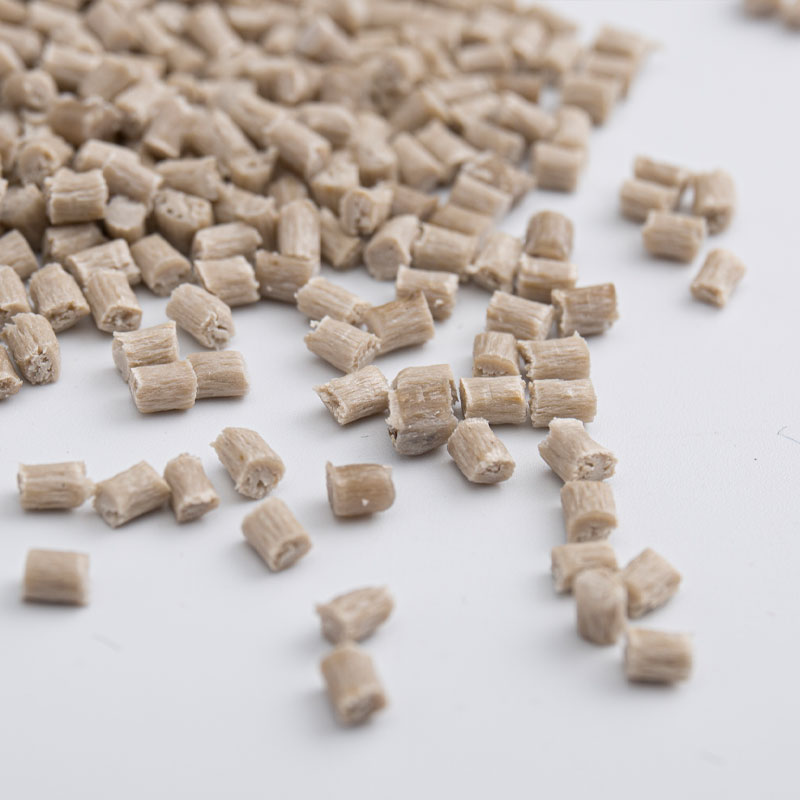
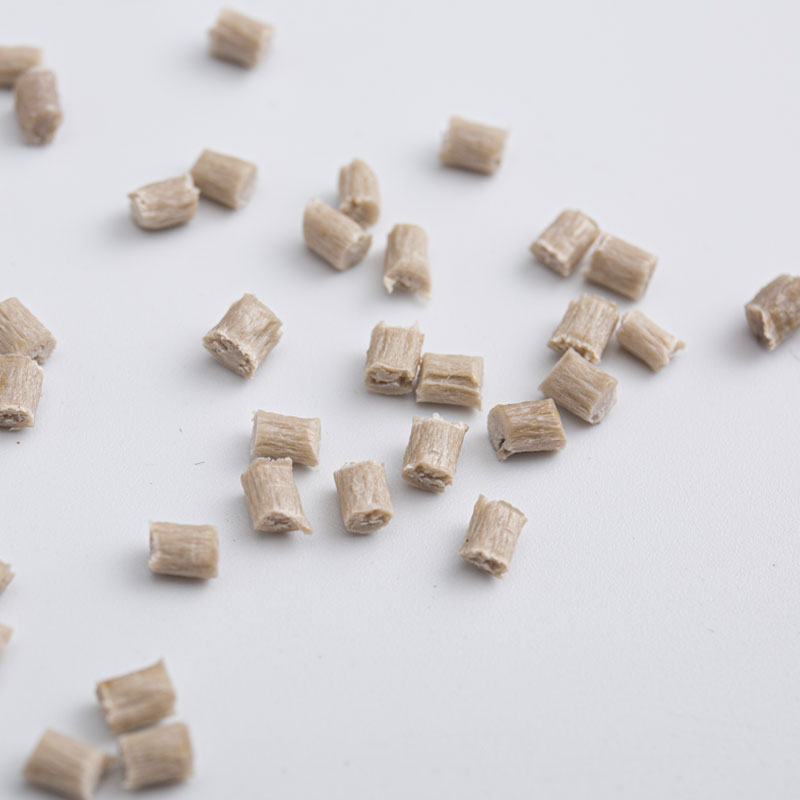
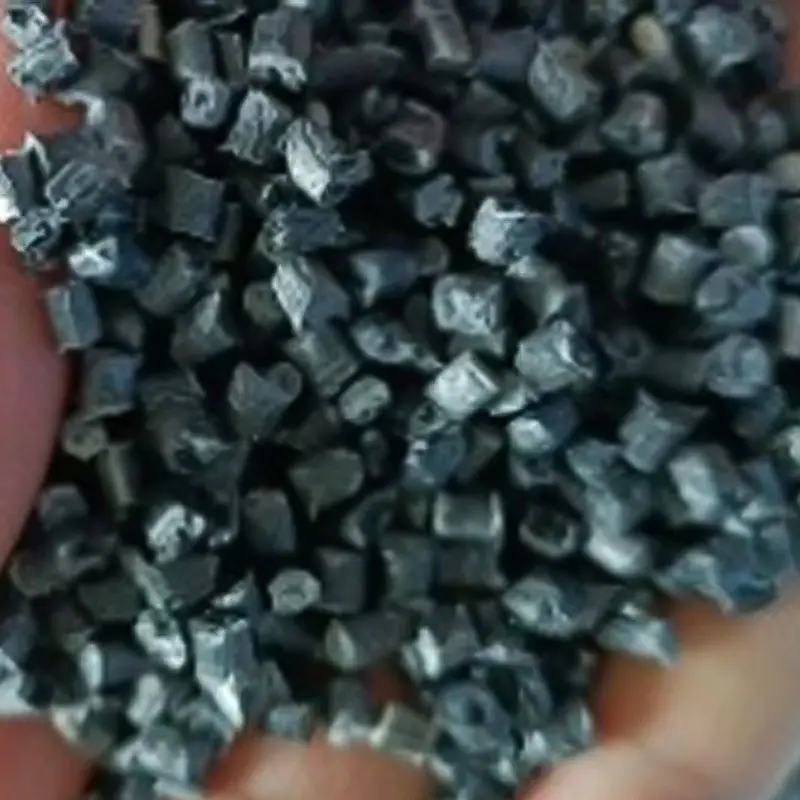
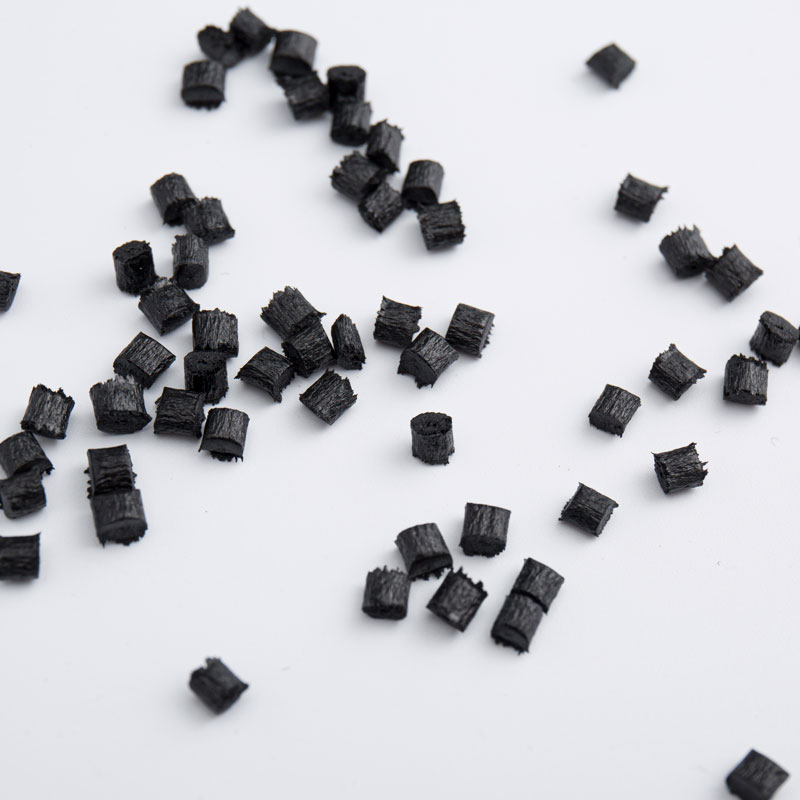 PEEK CF30 Compound for High-Load High-Temperature ApplicationsThis carbon-fiber-reinforced PEEK offers high stiffness, dimensional stability, and wear resistance, making it a strong choice for demanding structural and thermal environments where standard polymers fall short.View Product →
GF30 Direction
- Flexural modulus: 8.5 GPa
- Density: 1.46 g/cm3
- Volume resistivity: 1015 ohm-cm
- Relative cost: 1x
- Best for cost-sensitive stiffness and dimensional stability
CF30 Direction
- Flexural modulus: 21 GPa
- Density: 1.34 g/cm3
- Volume resistivity: 102 ohm-cm
- Relative cost: 4-6x
- Best for lightweighting, conductivity, and fatigue
A carbon-fiber compound changes the failure mode, not just the stiffness number. After a matrix crack forms, individual fibers continue to bridge the gap and carry load, which is why CF-reinforced parts often show much longer fatigue life in cyclic applications than the same resin with glass fiber.
Functional Additives Expand What One Pellet Can Do
Halogen-free flame retardants, PTFE/MoS2 lubricant packages, and conductive carbon let a single base polymer family cover applications that used to require five different resins, which cuts qualification cost and simplifies the supply chain.
The practical result shows up in every segment. A UL94 V-0 flame-retardant PA66 with low smoke density can serve electrical enclosures, while a PA66 with PTFE and MoS2 runs as a self-lubricating gear that never sees an oil bath. Carbon-filled grades provide electrostatic discharge protection at surface resistivities around 102 to 106 ohm/sq. Heat-stabilized and hydrolysis-resistant formulas protect parts in coolant and hot-oil exposure. This is why why modified PA plastic pellets deserve a close look during material selection.
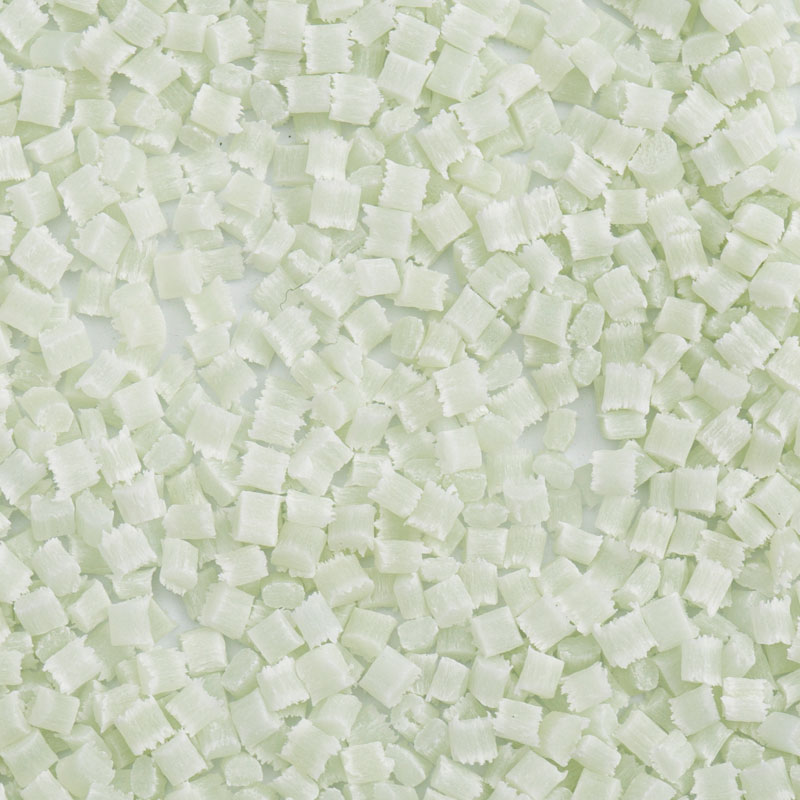
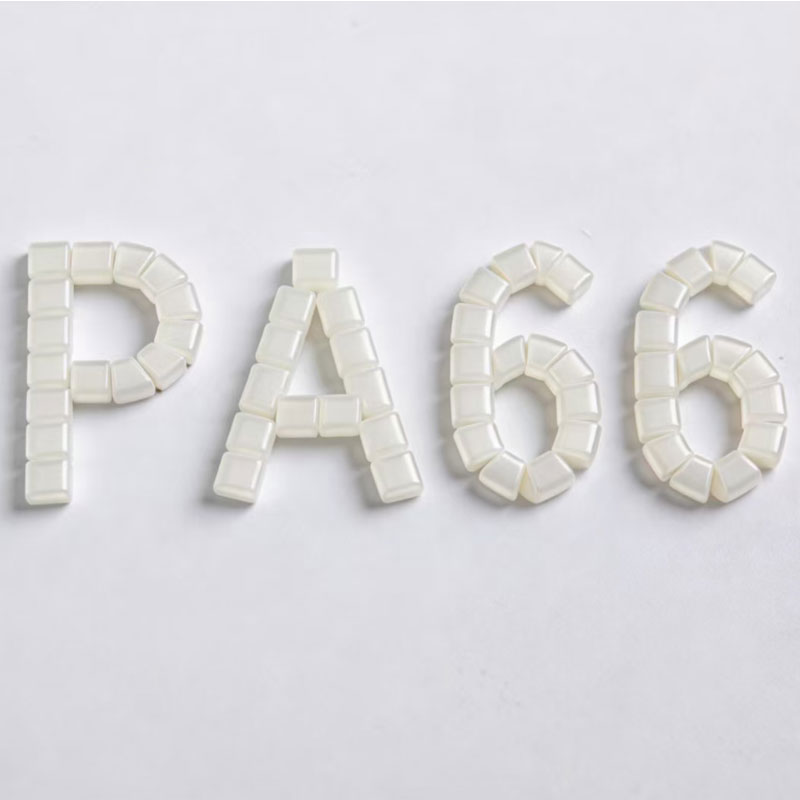
 PA66 with MoS2 and PTFE for Self-Lubricating Wear PartsThis modified nylon combines mechanical strength with internal lubrication, suited for gears and moving components that operate without external oil, reducing maintenance and extending service life.View Product →
| Modification | Key target value | Base resin example | Typical application |
| Flame retardant | UL94 V-0, low smoke density | PA66 | Rail and electrical enclosures |
| Wear and friction | Dynamic COF 0.12-0.2 | PA66, POM, PPA | Gears, bushings, sliding guides |
| Conductive / antistatic | Surface resistivity 102-106 ohm/sq | PA66-CF30, PC | ESD housings and trays |
| Hydrolysis / oil resistance | Tensile retention above 80% after 1000 h in hot oil | PA6-GF30 | Engine covers, oil pans |
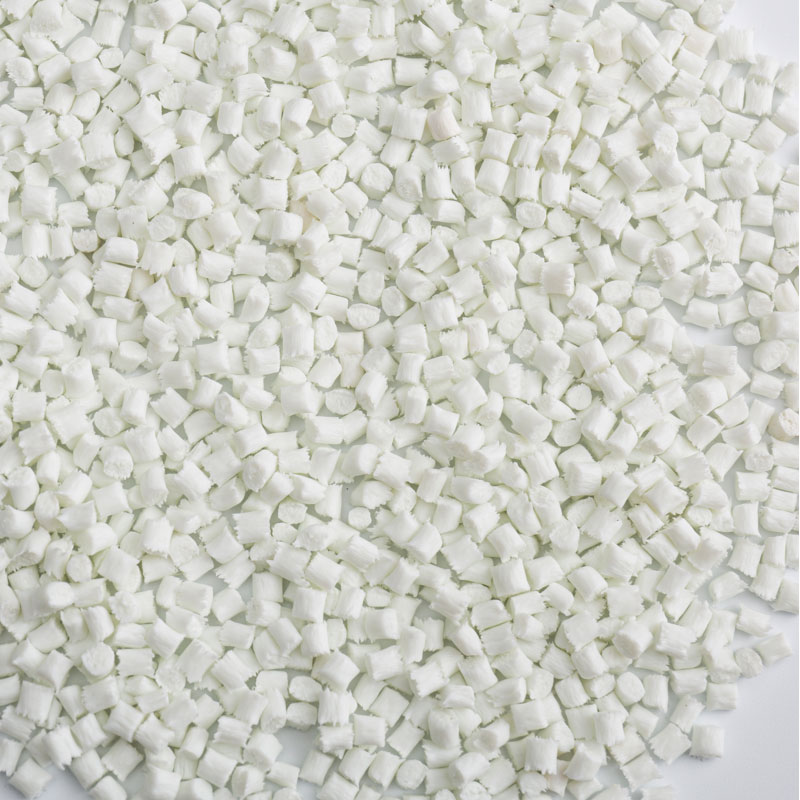
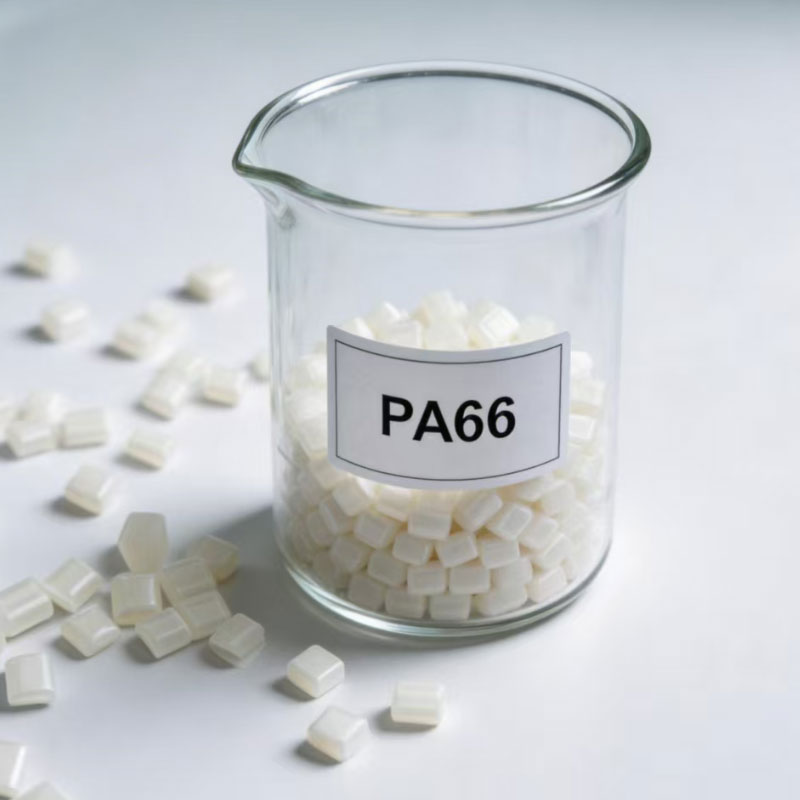 Halogen-Free Flame-Retardant PA66 with Low Smoke DensityThis PA66 grade uses a phosphorus-nitrogen flame retardant system, achieving high CTI and glow wire ratings, making it a safer option for electrical enclosures and high-voltage components.View Product →
T
UL94 V-0 means the test bar self-extinguishes within 10 seconds after the flame is removed, with no burning drips that ignite a cotton indicator. That rating says nothing about smoke density, which is why halogen-free low-smoke compounds are specified for rail and building applications even when standard V-0 would pass.
Sustainable High Performance Is No Longer Optional
Recycled content can enter high-performance compounds without downgrading the final part, but the compounder must control molecular weight, contaminant level, and batch-to-batch consistency much more strictly than with virgin polymer.
Industrial reclaim streams, such as automotive sprues, injection runners, and mold trials, are the practical feedstocks for PCR and post-industrial recycled compounds. They arrive with a known thermal history and fewer contaminants than consumer waste. Processors certified to the Global Recycled Standard prove the chain of custody; CQC and IATF16949 cover product compliance and the quality-management side. Zhejiang Lisu Composite Materials Co., Ltd. is one example of a compounder that holds all three certifications and publishes material-specific compliance data. The real issue is not whether recycled nylon can hit the test-spec numbers, but whether it can hit them in every bag of a multi-ton order.
- Raw-material verification on every incoming lot
- Automated precision dosing to keep additive levels stable
- Online melt-flow and viscosity monitoring during compounding
- Lot-level tensile, impact, and thermal index testing before release
How to Choose a High-Performance Material Supplier
Supplier process control and validation data matter more than headline property tables when you are committing a high-performance compound to production.
Property sheets describe a single test batch; production parts depend on every batch. A qualified supplier can show incoming resin inspection, automated dosing records, online mixing parameters, and lot-level mechanical test results. The same logic applies to recycled grades, where the variability risk is higher. Certifications give you an audit trail, but nothing replaces a small pilot trial with production-equivalent tooling.
- Document the full duty cycle, including temperature peaks, media exposure, cyclic load, and UV, not just the maximum operating temperature.
- Request a pilot lot and run 100-200 parts with production parameters to measure shrinkage, warpage, and cycle time.
- Audit the compounder's process controls, covering raw-material inspection, automated dosing, and online monitoring.
- Validate aged properties in the real environment rather than relying on dry lab data.
- Review total landed cost, including weight reduction, cycle-time savings, and scrap rates.
260°CPEEK max continuous service temperature
62%Weight reduction vs. aluminum impeller
V-0UL94 baseline for electrical parts
100%Lot consistency target per production batch
Frequently Asked Questions
Can recycled high-performance polymers match virgin performance?
Yes, when the feed stream is clean and the compounder re-stabilizes the formulation. Industrial reclaim PA and PBT compounds typically retain 85-95 percent of virgin mechanical properties; the gap nearly closes for tensile modulus and widens for impact and elongation. Ask for lot-level impact and elongation data before approval.
What is the practical temperature limit of PPS versus PEEK?
PPS compounds serve continuous-use conditions around 200-220°C, with short excursions to 240°C. PEEK runs continuously at 260°C, offers higher fracture toughness, and resists steam and caustic media better. In wet environments, the gap widens because PPS becomes more brittle after thermal aging.
How do I validate a new compound before production?
Run a pilot molding trial with production parameters, measure shrinkage and warpage across 50 or more shots, verify dimensional stability at operating temperature, and test aged specimens in the actual fluid or chemical environment. Mechanical data from a dry test bar is never enough.
Are GF30 and CF30 interchangeable?
No. Glass-reinforced grades cost less and tolerate abrasive wear; carbon-reinforced grades provide roughly 2.5 times higher modulus, about one-third lower density, and electrical conductivity. Swapping one for the other changes shrinkage, draft requirements, corrosion behavior, and part price.