 EN
EN English
 中文简体
中文简体 Español
A pump impeller rated for 90 °C process fluid fails within six months. A connector survives assembly but distorts the first time the board passes through a 260 °C lead-free reflow peak. A valve plate handles the chemical fine at room temperature, but not at 180 °C in continuous service. All three failures share the same root cause: the material specification did not match the real operating window.
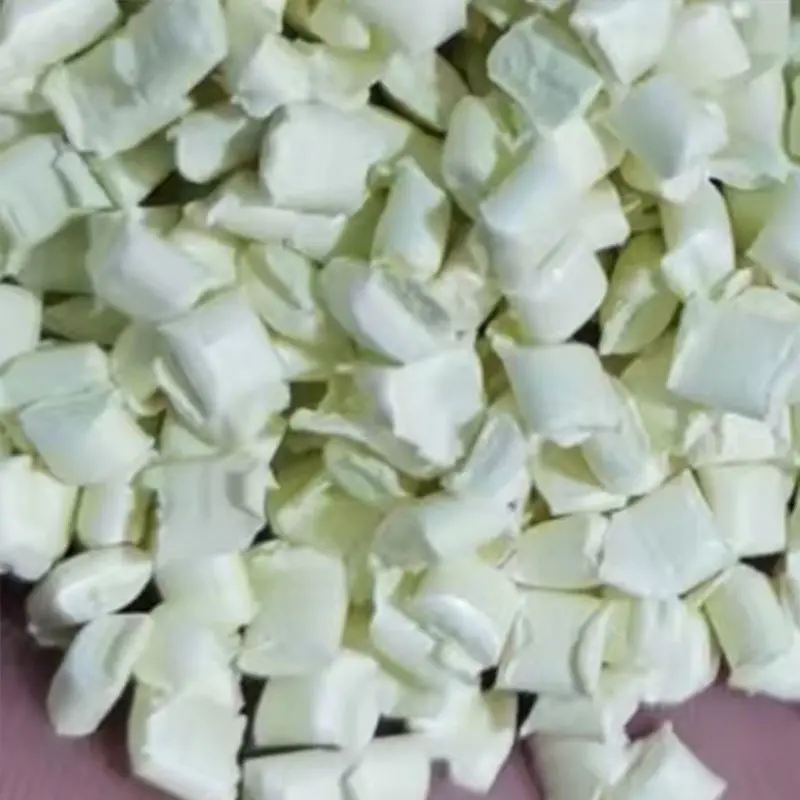
PPS plastic pellets close that gap. Polyphenylene sulfide is a semi-crystalline, high-temperature engineering thermoplastic with a melting point near 280 °C and a continuous service temperature of 200–220 °C in most grades. Its para-phenylene and sulfur backbone is stiff, thermally stable, and inherently flame-retardant, so most PPS grades reach UL94 V-0 without a special additive package.
This article explains what PPS pellets deliver, how reinforcement changes their behavior, where they make economic sense, and how to specify a custom grade without guessing.
What Makes PPS Pellets Stand Out Among Engineering Plastics
PPS sits between commodity thermoplastics and super-polymers. It offers more heat resistance than nylon or PBT, broader chemical resistance than most semicrystalline polymers, and a far lower cost than PEEK. That positioning makes it the default answer for parts that must operate at 180–220 °C without creep or degradation.
The chain structure explains the behavior. Sulfur atoms link para-phenylene rings into a stiff backbone that packs into a tightly ordered crystal phase. The result is a set of numbers that design engineers can rely on:
| Property | Typical Value | Why It Matters |
|---|---|---|
| Density | 1.35 g/cm³ | Lightweight compared with die-cast metal |
| Melting point | 280 °C | Wide processing and service window |
| Continuous service temperature | 200–220 °C | Hot environments without loss of strength |
| Heat deflection temperature (1.82 MPa) | 135 °C unmodified; up to 260 °C glass-reinforced | Load-bearing capacity at elevated temperature |
| Water absorption (24 h) | < 0.05 % | Dimensional stability in humid service |
| Flammability | UL94 V-0, inherent | No flame-retardant additives required |
| Chemical resistance | Resistant to acids, bases, fuels and solvents | Reliable in aggressive media |
Low moisture pick-up is one of the most practical details. Nylon and polyester parts absorb water and change dimension; PPS does not. Precision molders therefore use PPS pellets for housings, bobbins and sensor bodies that must hold tight tolerances through humidity and thermal cycling.
If your part does not yet require a filler system, the standard resin is the natural starting point:
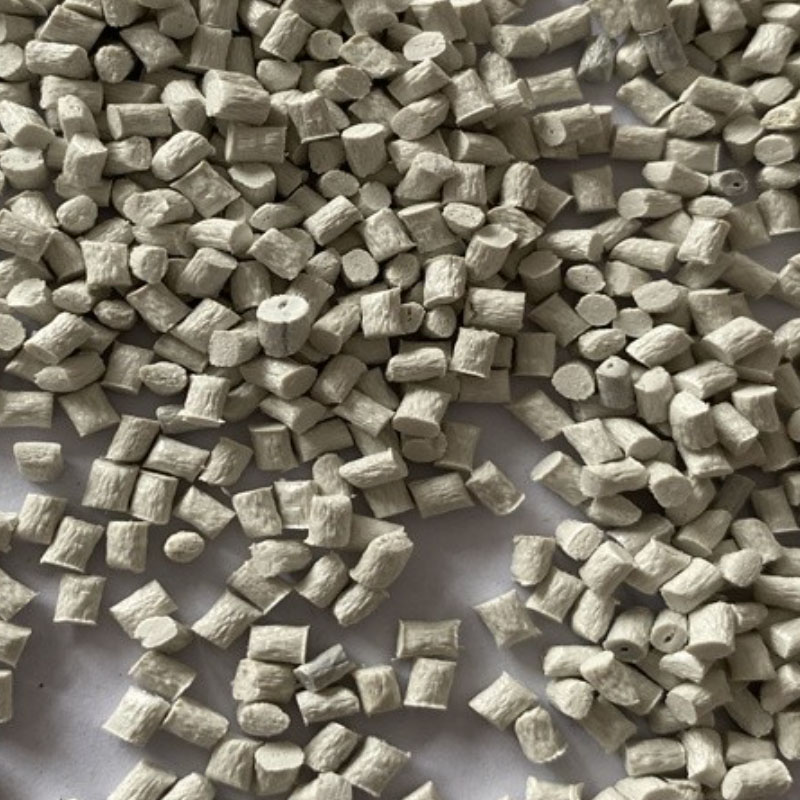
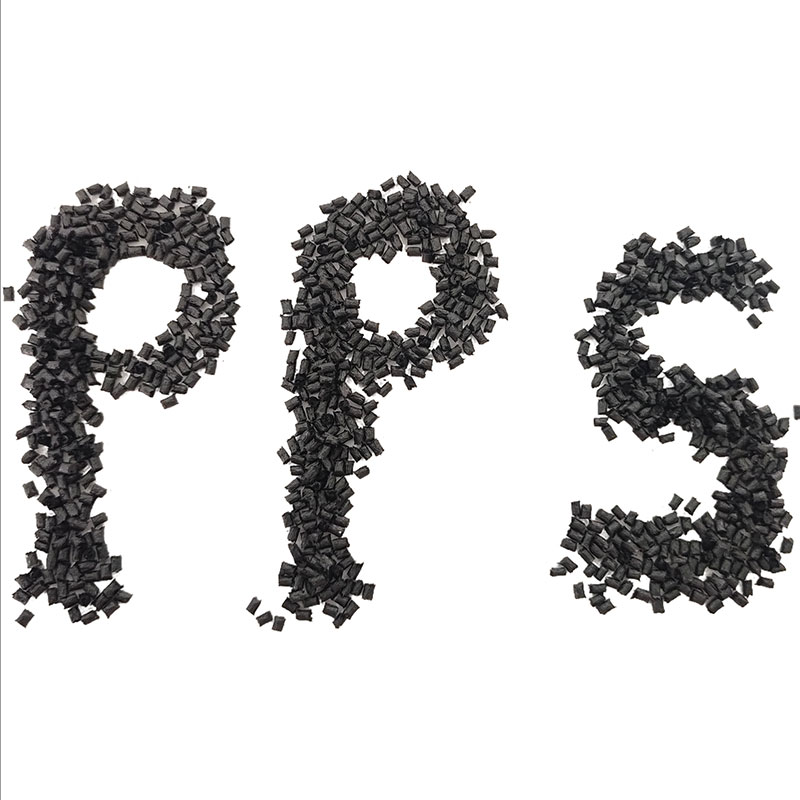 Standard Polyphenylene Sulfide PPS Resin for High-Temperature ApplicationsThis base PPS resin offers excellent heat and chemical resistance, but its brittleness limits structural use. It is the natural starting point if your part requires no filler system.View Product →
Modified PPS Grades: Match the Formulation to the Operating Point
Unmodified PPS is stiff but brittle. Its notched impact strength is low, so structural parts need modification. Glass fibre raises rigidity, strength and creep resistance; PTFE reduces friction and wear; carbon fibre adds conductivity and stiffness; mineral fillers improve dimensional stability and reduce flash. Choosing a grade means connecting the operating point of your part to the right filler system.
High heat, high rigidity
Glass-reinforced grades such as PPS-GF45 push heat deflection temperature toward 260 °C. Choose for pump housings, impellers and structural parts near heat sources.
Friction and wear
PPS-GF30-PTFE compounds lower the coefficient of friction and resist abrasive wear. Choose for bushings, valve seats and sliding mechanisms.
Dimensional precision
Mineral or hybrid-filled PPS reduces warpage and shrinkage. Choose for housings and frames that must hold tight tolerances over large surfaces.
Conductive or antistatic
Carbon-fibre-reinforced PPS provides electrical conductivity and static dissipation. Choose where electrostatic discharge or shielding is a risk.
Broad chemical attack
High-molecular-weight linear PPS resists oils, fuels, acids and solvents. Choose for continuous chemical exposure above 150 °C.
Low-flash precision molding
Branched or cured PPS flows readily into thin sections with less burr. Choose for dense, multi-cavity electronic components.
The list above is not exhaustive. A compounder can combine fillers, adjust fibre content, and tune the base resin. Before committing to a grade, compare data sheets against your own test conditions. A practical set of criteria for evaluating a PPS compound will help you filter the claims that matter.
For applications that combine heat, chemical exposure and sliding contact, PTFE-modified PPS is a proven route. Typical uses are bearing cages, valve seats and pump vanes where a dry-running material must not gall the mating metal surface. The production-ready option for this profile is:
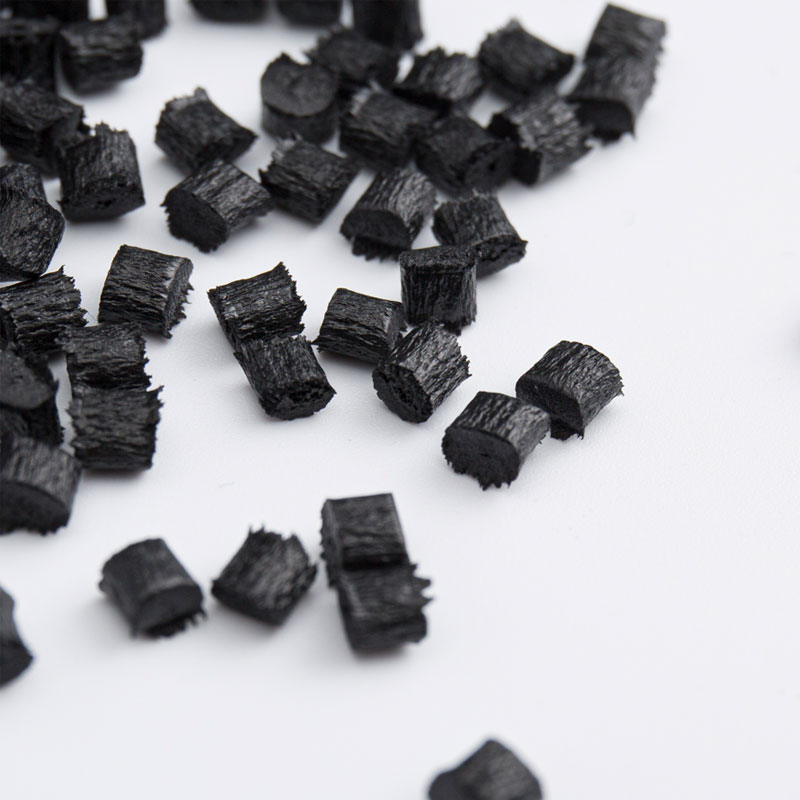
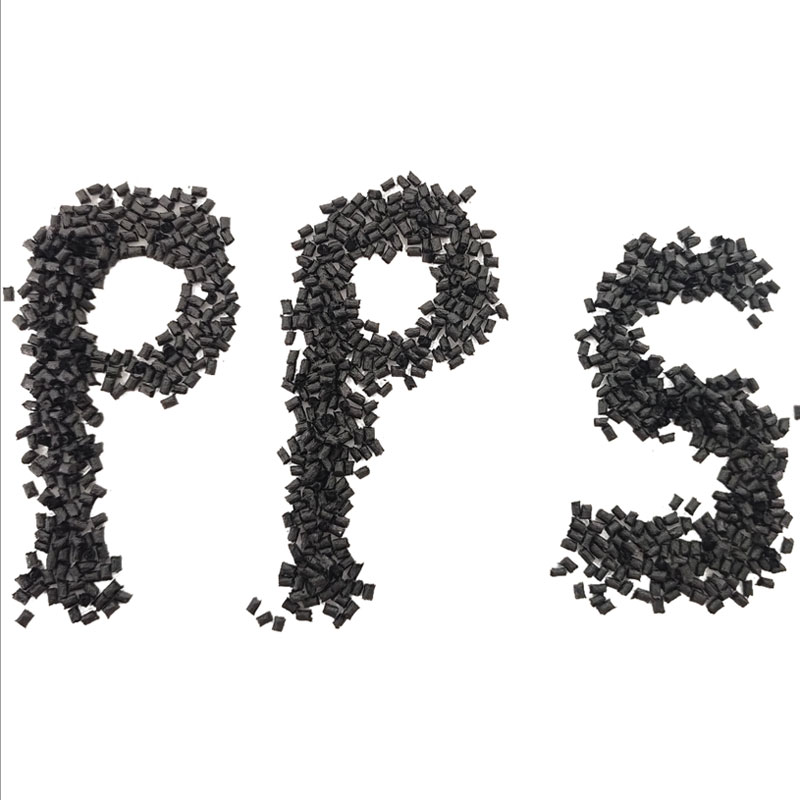 PPS GF30 PTFE Wear-Resistant Flame Retardant Composite PelletsThis grade combines 30% glass fiber with PTFE lubrication, providing high strength and self-lubricating properties. It suits dry-running components like bearings and valve seats that face heat and chemical exposure.View Product →
Where PPS Pellets Work in Real Components
Automotive
Engine control sensors, fuel system components, E-pump parts and LED headlamp housings all rely on PPS. It resists hot engine oil, coolant and fuels, holds its dimensions over a wide temperature span, and survives vibration without stress cracking.
Electrical and Electronics
Connectors, relay bases, bobbins and sensor housings see lead-free solder reflow at 260 °C peaks. PPS withstands these excursions, while its inherent flame retardancy and low outgassing meet UL and automotive electrical requirements.
Industrial and Chemical Processing
Pump impellers, valve plates, compressor parts and filter components spend their service life in contact with aggressive media. Glass-reinforced PPS keeps its stiffness where ordinary thermoplastics soften, and its low creep keeps sealing surfaces flat over time.
For high-temperature structural parts where rigidity must survive above 200 °C, the grade we specify most often is:
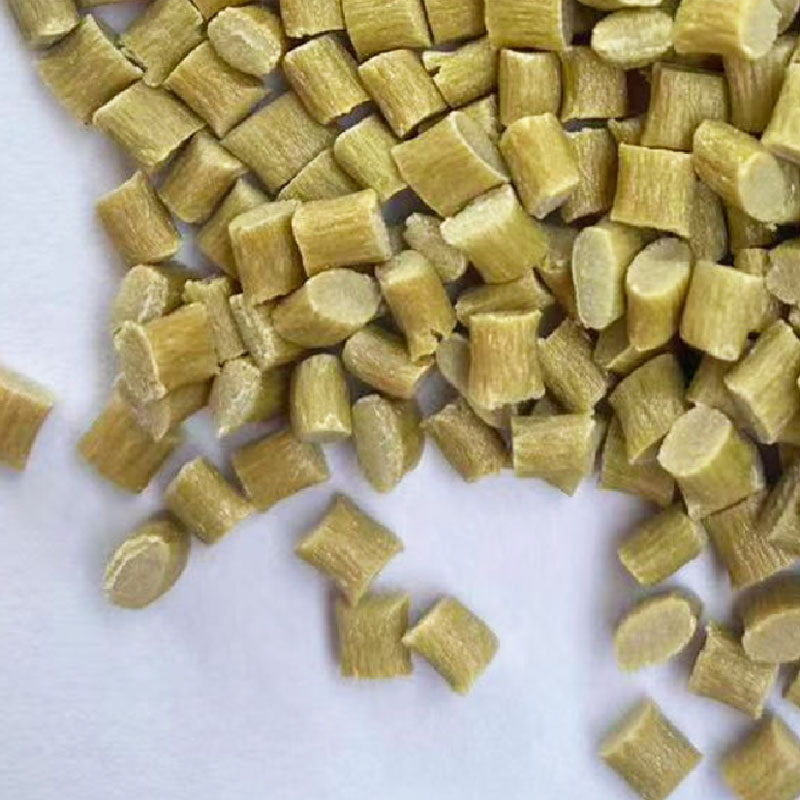
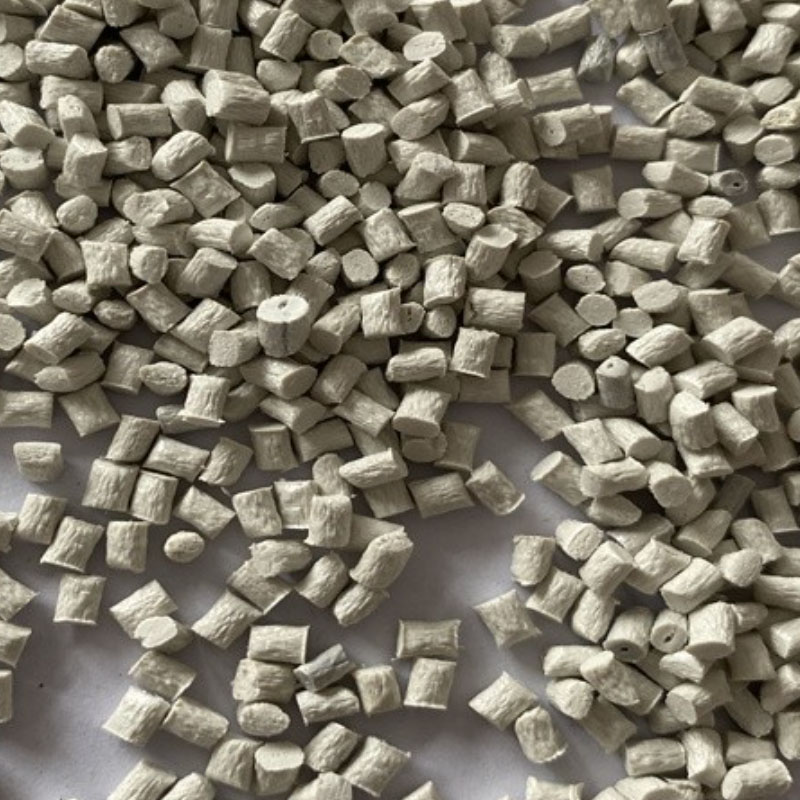 PPS GF45 High-Rigidity High-Temperature Plastic PelletsReinforced with 45% glass fiber, this grade delivers exceptional rigidity and dimensional stability above 200°C. It is specified for structural parts in automotive and electrical applications requiring sustained performance.View Product →
How a Custom PPS Pellet Goes From Concept to Production
Standard grades cover many applications, but some projects need a tailored property window. That is where a modified plastic compounder adds value. The workflow below is the one we follow at Lisu Composite Materials, and it works as a template for any buyer.
- 1
Define the operating window
Document mechanical loads, temperature profile, chemical media, electrical requirements, target lifetime, and the certifications the part must pass, such as UL or IATF 16949.
- 2
Develop the formulation
Select the base PPS resin type, filler type and loading, and any functional additives. A compounder can iterate the formula until lab results match your target values.
- 3
Run pilot compounding and molding trials
Produce a small test lot, mold actual parts, and verify dimensional stability, weld-line strength, surface quality, and aging behavior under realistic conditions.
- 4
Qualify batches and secure supply
Agree on per-batch test criteria, confirm lot-to-lot consistency, and establish stable lead times, packaging, and documentation before production scale-up.
The principle is simple: define the failure mode you must avoid, agree on measurable test criteria, and qualify the pellet on real tooling before you scale. That discipline prevents most field failures before they start.
Frequently Asked Questions
What is the difference between PPS and PEEK pellets?
PEEK runs at higher continuous temperatures, often above 250 °C, and offers better toughness and fatigue resistance, but it costs significantly more. PPS is the more economical high-heat choice for 180–220 °C continuous service while still providing excellent chemical resistance.
Can PPS sprue and runner scrap be reused?
In many cases, yes. Because the PPS backbone resists molecular-weight degradation during molding, reground sprue and runner material can be blended into virgin pellets at a controlled ratio. Confirm the acceptable regrind percentage with your compounder to avoid brittleness or contamination over repeated thermal histories.
What is the difference between linear and cured PPS?
Linear PPS has higher mechanical strength, toughness, and elongation, which is why it is preferred for structural parts. Cured, or cross-linked, PPS flows better and produces less flash in thin-wall and multi-cavity molds, but it is more brittle and less suitable for load-bearing designs.
How should PPS pellets be dried before injection molding?
Typical practice is drying at 130–150 °C for 3–4 hours until moisture content drops below 0.02%. Melt temperature usually ranges from 300 to 340 °C, and mold surface temperature from 130 to 160 °C, to achieve sufficient crystallinity and a consistent surface finish. Always follow the technical data sheet supplied with your specific grade.