 EN
EN English
 中文简体
中文简体 Español
An engineer working on an underhood connector is told the part must survive continuous heat around 160°C and regular washdown with hot water. PA66 looks fine on the drawing board, but after a few weeks of exposure, the dimensions drift and the strength drops enough to worry the team. The switch to modified PPA plastic pellets solves both problems at once. This guide explains how these compounds are built, what they do differently from standard nylon, and which grade to specify when heat, moisture, or friction is the limiting factor.
What Are Modified PPA Plastic Pellets?
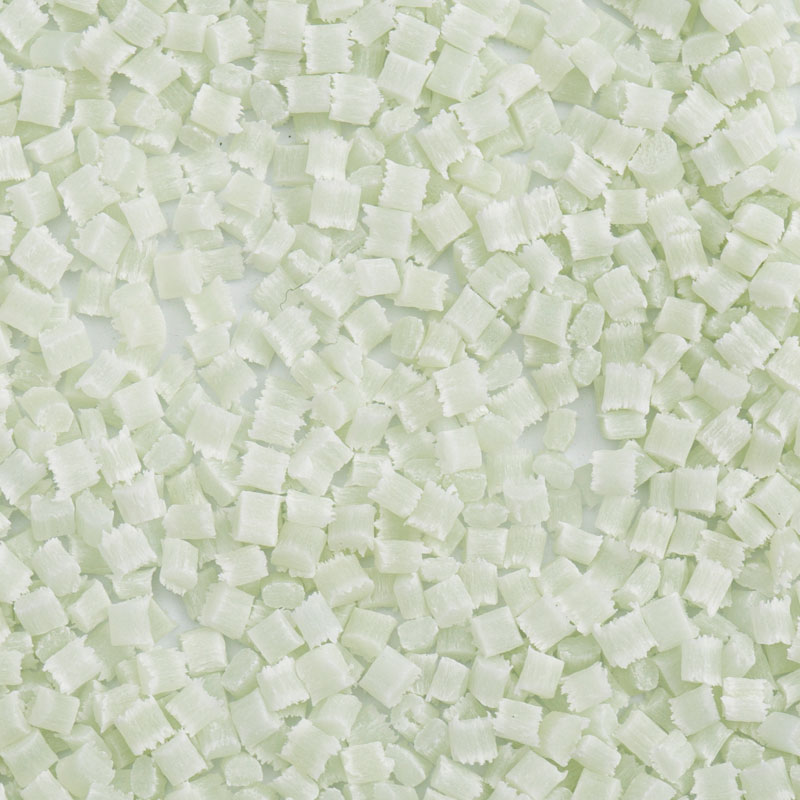
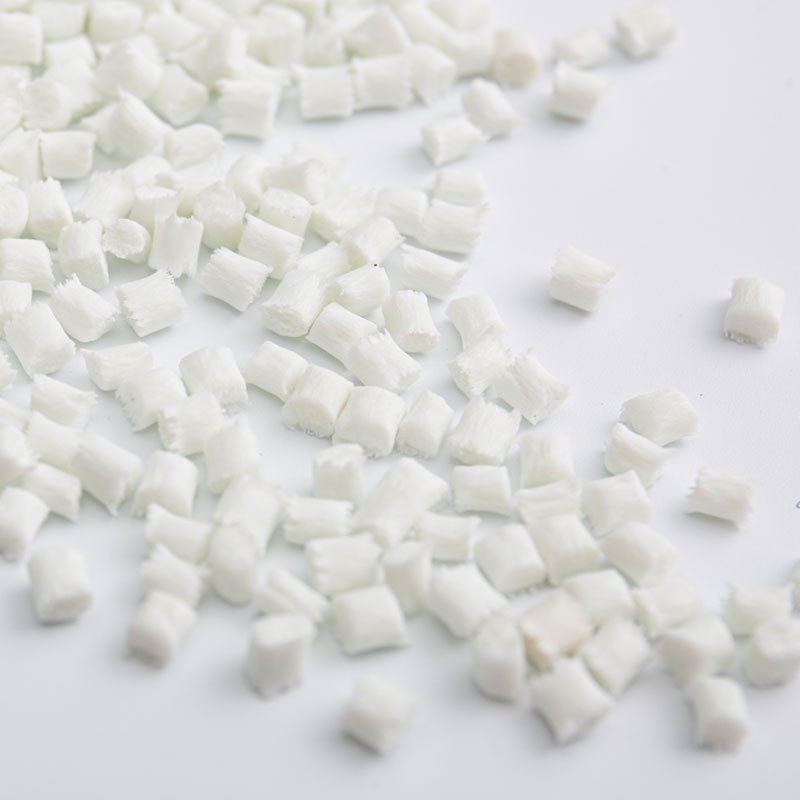
PPA, or polyphthalamide, is a high-performance polyamide whose polymer backbone contains aromatic rings. That structure raises the glass transition temperature and reduces moisture sensitivity compared with aliphatic nylon 66. PPA pellets are rarely sold as unmodified resin. In the industrial supply chain, they are typically delivered as modified compounds: a base PPA resin plus modifiers selected to meet a specific mechanical, thermal, electrical, or tribological requirement.
- Glass fiber: raises tensile strength, flexural modulus, heat deflection temperature, and creep resistance.
- Carbon fiber: adds stiffness at lower density, improves thermal and electrical conductivity, and helps dissipate static charge.
- PTFE and internal lubricants: lower the coefficient of friction and wear rate in dry-running contacts.
Standard stabilizers, colorants, and nucleating agents are also blended into commercial grades so that a single pellet represents a finished material answer rather than a trial recipe.
How Modified PPA Compares with PA66
The most common design question is when PPA is worth the premium over PA66. The short answer: choose PPA when the part must hold its mechanical properties above roughly 150°C, stay dimensionally stable after humidity exposure, or survive hot fluids that soften standard nylon.
| Property | PA66-GF30 | Modified PPA-GF30 |
|---|---|---|
| Continuous use temperature | 120–140°C | 160–200°C |
| HDT at 1.82 MPa | About 245°C | About 280–300°C |
| Moisture absorption (equilibrium) | 2.5–3.5% | 0.4–1.0% |
| Dimensional change in humid service | Noticeable after conditioning | Low and predictable |
| Resistance to hot water and coolants | Moderate | Good |
| Relative material cost | Reference | Higher |
The practical impact is visible in the field: parts that never see continuous high heat and remain dry can stay with PA66. The value of modified PPA appears in powertrain components, electrical connectors, and pump housings where temperature and moisture act together.
Standard Modified PPA Grades and Their Properties
Most compound suppliers organize their PPA portfolio around three reinforcement strategies. Each one exists because it solves a distinct set of field failures.
PPA-GF30: Heat Resistance and Structural Rigidity
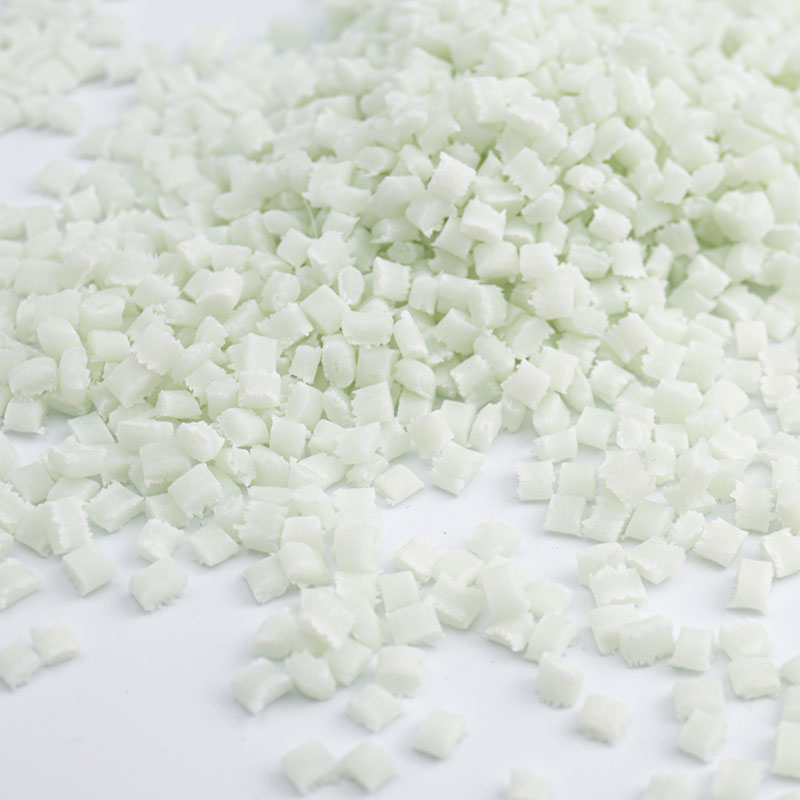
Glass-reinforced PPA is the workhorse of the range. A 30% loading roughly doubles the stiffness of the base resin and pushes the heat deflection temperature from about 120°C up to the 280–300°C range under load. It is the grade to specify for structural housings, brackets, and components that must resist hot oil, coolant splash, or creep at sustained temperatures.
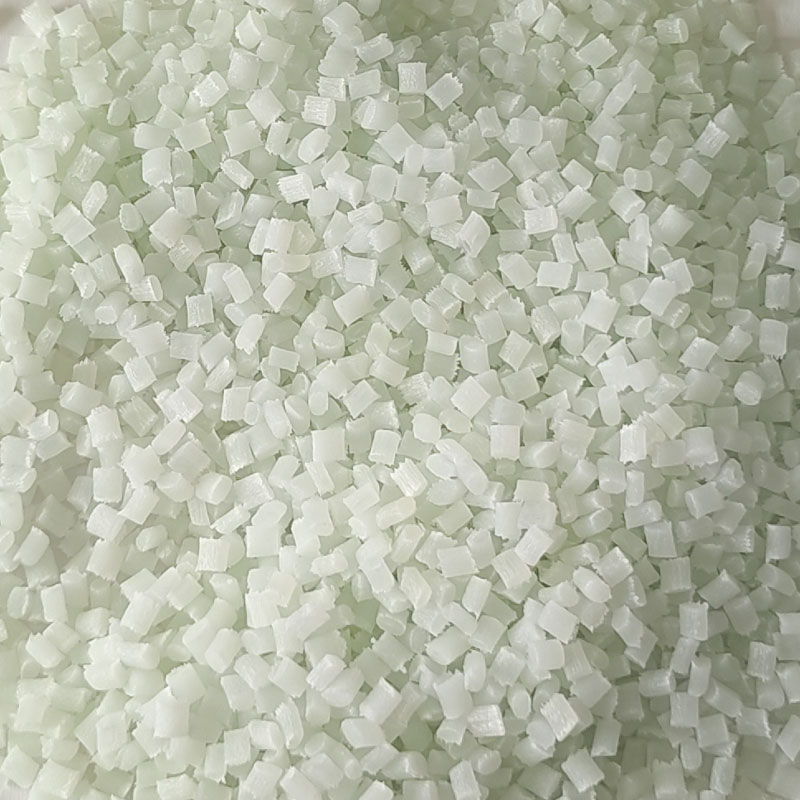 Glass-Fiber Reinforced PPA with 30% Loading for High-Heat Structural PartsThis grade doubles stiffness and raises heat deflection temperature up to 280–300°C, making it a strong choice for housings, brackets, and components exposed to hot oil or sustained heat.View Product →
PPA-CF20: Conductivity and Dimensional Stability
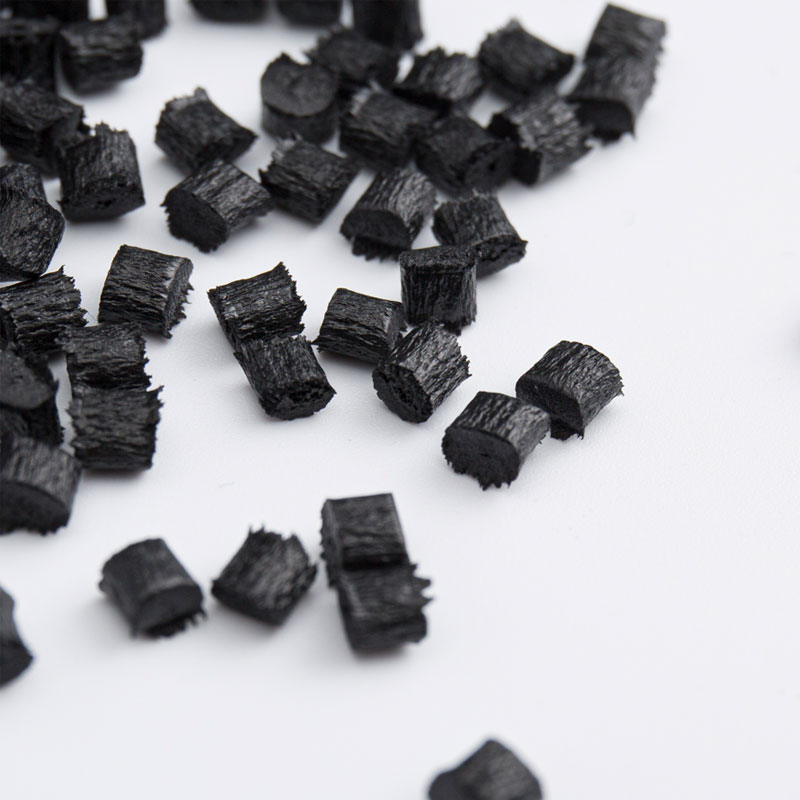
Carbon-fiber-reinforced PPA with 20% carbon fiber offers lower density than glass-filled equivalents, higher specific stiffness, and enough electrical conductivity to bleed off electrostatic charge. The carbon fibers also reduce the coefficient of linear thermal expansion, which keeps precision parts in tolerance when humidity or temperature changes.
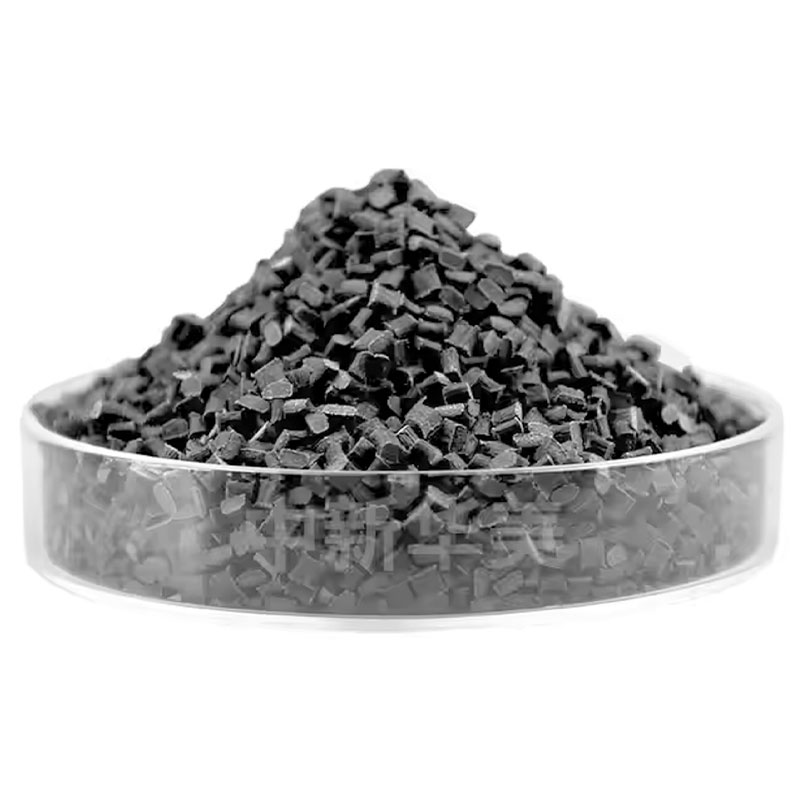 Carbon-Fiber Reinforced PPA with 20% Loading for Lightweight Dimensional StabilityWith lower density, higher specific stiffness, and electrical conductivity, this conductive grade suits precision parts where dimensional stability and anti-static performance matter.View Product →
PPA-PTFE: Reduced Friction and Enhanced Wear Resistance
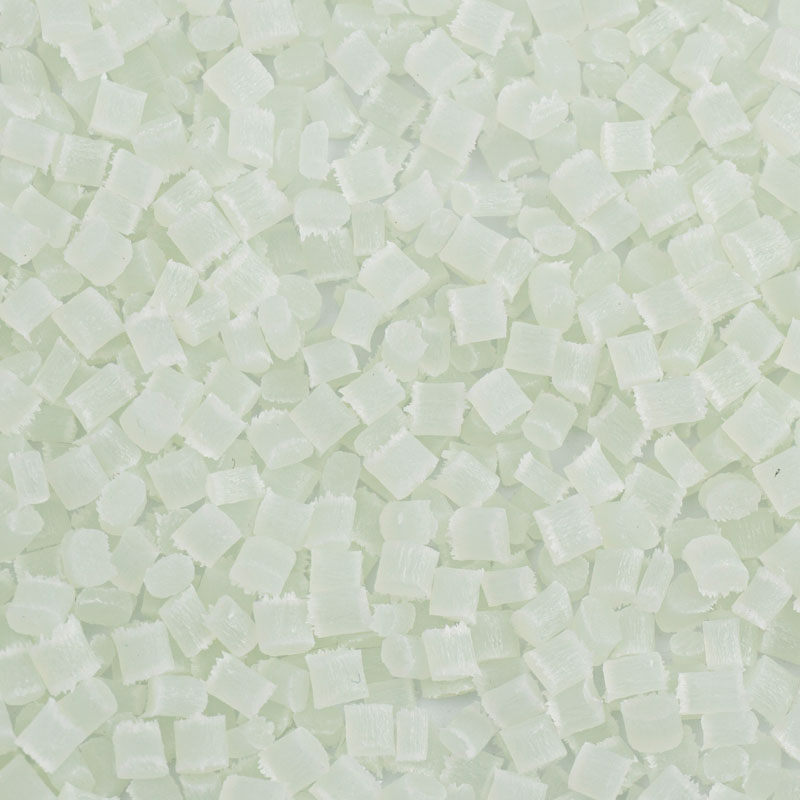
Adding PTFE changes the surface behavior of PPA without sacrificing its thermal base. The modified pellets show a significantly lower coefficient of friction and a lower wear rate in dry-running contact, making them suitable for bushings, gears, and sliding components that operate without grease or oil.
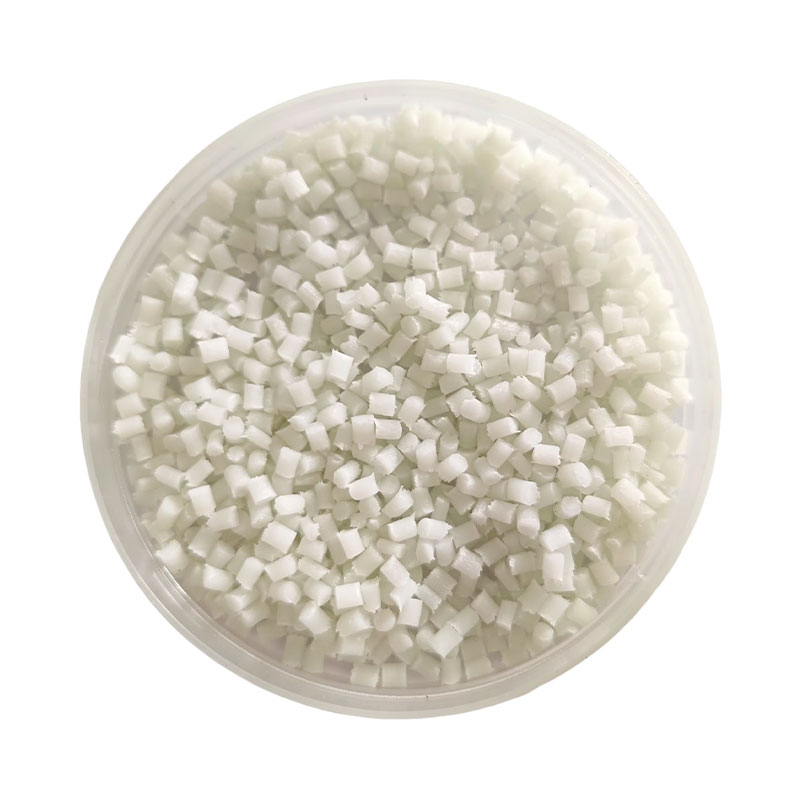 PTFE-Modified PPA for Self-Lubricating Wear-Resistant Moving PartsThis PTFE-filled grade offers a very low friction coefficient and reduced wear in dry-running conditions, ideal for bushings, gears, and sliders that operate without lubrication.View Product →
Where Modified PPA Pellets Deliver the Most Value
A quick screen is to compare the operating condition against a short list of trigger points. If one or more match, modified PPA deserves a trial.
Continuous heat above 150°C
Choose PPA-GF30; PA66 creeps and loses strength near this range.
Tight tolerances in humid environments
PPA's low moisture uptake and the low CLTE of carbon-fiber grades keep parts dimensionally stable.
Electrostatic discharge risk
Carbon-fiber-reinforced PPA provides a path to dissipate static charge.
Sliding contact without lubrication
PTFE-modified PPA delivers a low-friction, low-wear surface in dry operation.
Hot oils, coolants, and splash fluids
PPA resists hydrolysis better than PA66 in elevated-temperature fluids.
Metal replacement for structural parts
Glass-reinforced PPA meets stiffness and heat requirements at a fraction of the mass.
In practice, this profile puts modified PPA in automotive underhood electrical systems, motor end shields, sensor housings, industrial pump wheels, valve bodies, and lead-free reflow connectors. For a broader look at where this material family fits, see the main uses of PPA plastic pellets.
Processing Guidelines for Modified PPA Pellets
Modified PPA is a high-temperature polymer, so it demands more care on the injection molding floor than standard nylons. The rules are straightforward.
- Dry the pellets before use. PPA is hygroscopic, even though it absorbs less moisture than PA66. Dry at 100–120°C for 4–6 hours and keep moisture below 0.1% to avoid splay and hydrolysis.
- Set a melt temperature in the 290–320°C range for most compounds. Avoid extended residence above 340°C because the polymer will degrade and cause brittle parts.
- Use a hot mold at 80–130°C. Hot molds promote crystallinity, improve dimensional stability, and reduce warpage in wall transitions.
- Balance injection speed and venting. PPA has good flow at temperature, but fast fills need adequate mold venting to prevent burn marks and short shots.
Frequently Asked Questions
How is modified PPA different from PA66?
PPA contains aromatic rings in the polymer backbone, which raise the glass transition temperature and lower moisture uptake. For continuous temperatures around 150°C and above, PPA compounds keep more of their original stiffness and dimensional accuracy than PA66.
Is modified PPA suitable for metal replacement?
Yes, particularly the glass- or carbon-fiber-reinforced grades. When the requirement is stiffness above 150°C, fatigue resistance, and weight reduction compared with die-cast aluminum or zinc, PPA compounds are a proven candidate.
Can I use an existing PA66 mold for PPA?
Sometimes, but check the higher melt and mold temperatures, gate size, and mold temperature control first. PPA compounds have a higher melt viscosity range and need generous flow channels and hardened tooling details.
Do PPA grades still absorb moisture?
Much less than PA66, but not zero. The polymer must be dried before processing, and finished parts will show a smaller property change after moisture conditioning than nylon 66 parts.
Modified PPA plastic pellets are not a replacement for every polyamide application. They are the right answer when a component combines heat, moisture, chemical exposure, or frictional load at a level that pushes PA66 past its limit. Specified correctly, they reduce field failures, extend service life, and make it easier to maintain tight tolerances under changing environments.