 EN
 English
 中文简体
 Español

The global composite materials market is projected to expand from USD 98.6 billion in 2024 to roughly USD 164 billion by 2030, a compound annual growth rate of about 8.9 percent.
For design engineers, sourcing managers, and injection molders, this trajectory means composite material selection is no longer confined to aerospace-grade thermosets cured in autoclaves.
The innovations driving the future of composite materials cluster around three fronts: polymer chemistry that extends temperature and wear limits, manufacturing processes that compress cycle times from hours to minutes, and recyclable formulations that close the material loop.
This article examines each front with measurable criteria you can apply when evaluating commercial composite grades.
USD 98.6B Global market size, 2024
8.9% Projected CAGR to 2030
90% Recycled carbon fiber stiffness retention
Polymer Innovations Driving Composite Materials Toward Thermoplastic Matrices
High-performance thermoplastics now match the structural output of thermoset composites while cutting part cycle times from more than an hour to under ten minutes.
A thermoplastic composite is a material system in which a melt-processable polymer matrix, such as PEEK, PPS, or PPA, is reinforced with glass, carbon, or aramid fibers so that parts can be formed, welded, and recycled by heat rather than by chemical cross-linking.
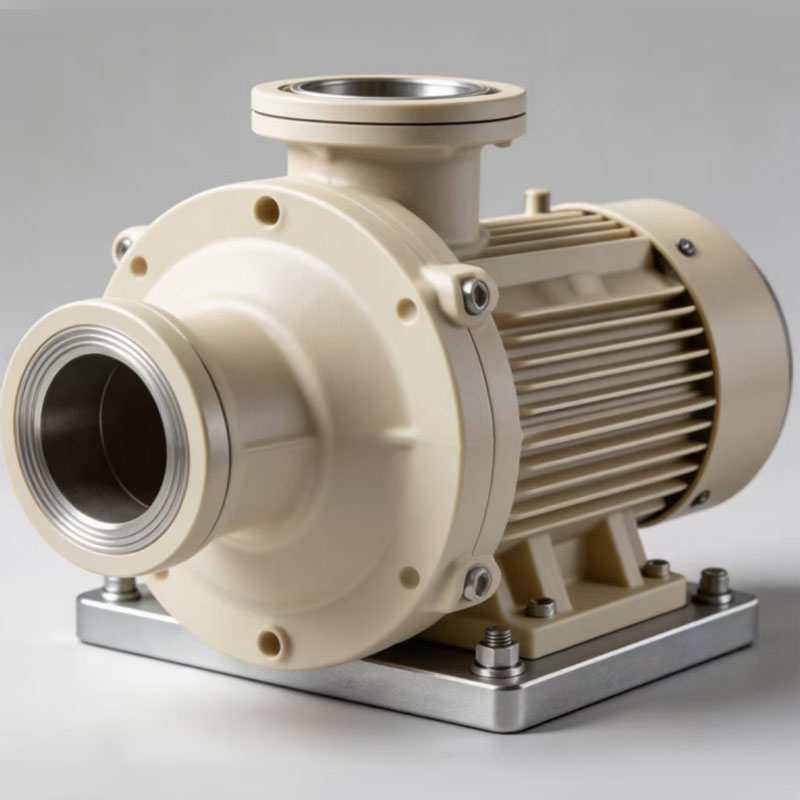
The most commercially relevant advances sit in high-temperature matrices. PEEK compounds with 30 percent carbon fiber maintain dimensional stability at continuous service temperatures up to 260 degrees Celsius, which puts them in direct competition with metal for automotive powertrain components, compressor pistons, and oil and gas seals. PPS with 45 percent glass fiber delivers high rigidity and creep resistance at 220 degrees Celsius for electronic connectors and pump housings. PPA compounds with glass fiber bridge the cost-performance gap for under-hood automotive parts exposed to sustained heat and chemical attack.
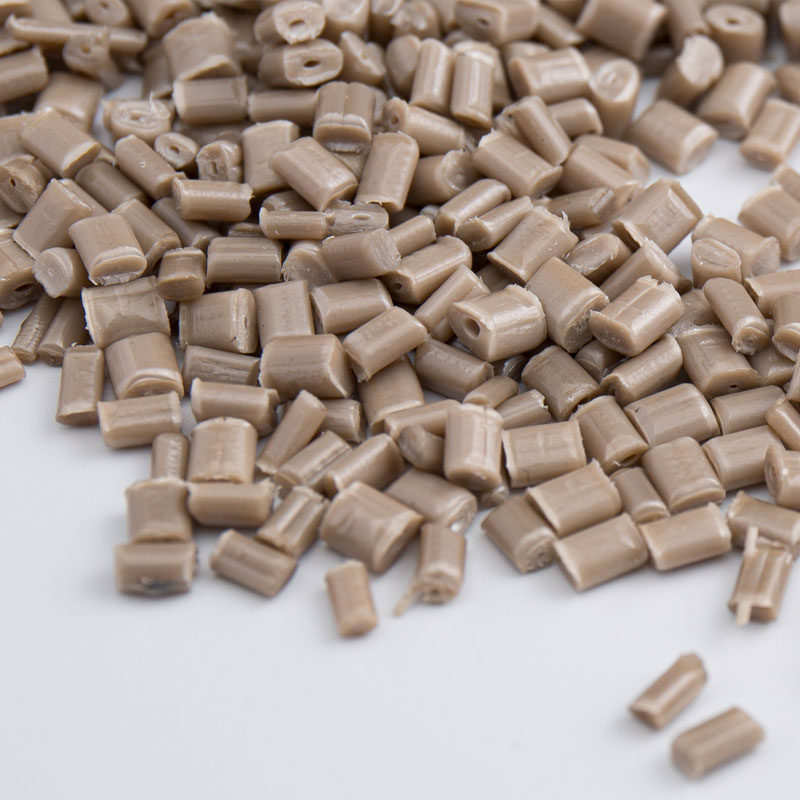
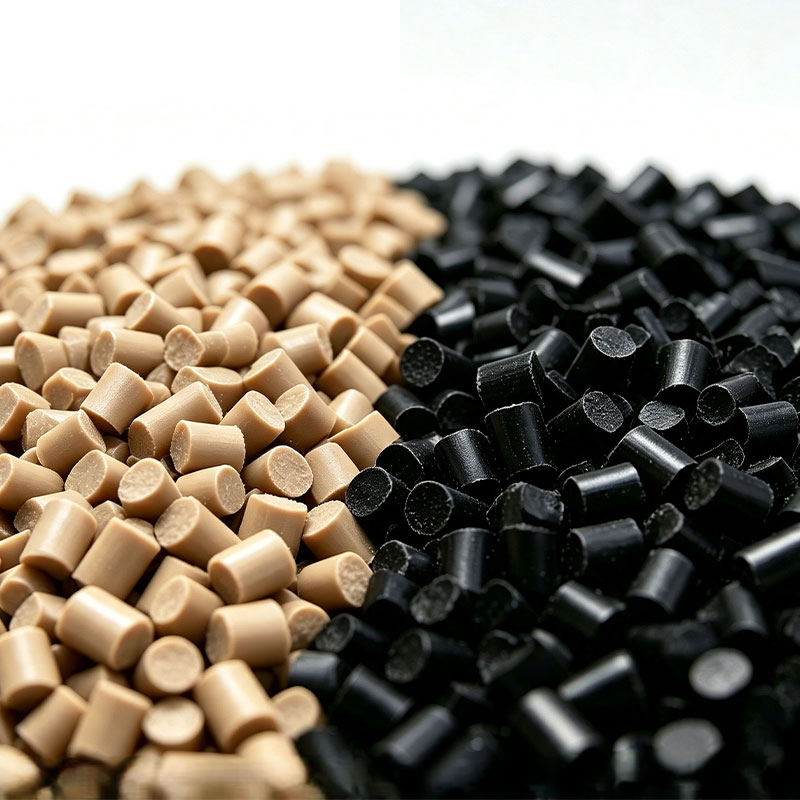
 PEEK CF30 Compound for High-Temperature Load-Bearing PartsThis grade offers 30% carbon fiber reinforcement for enhanced stiffness, wear resistance, and dimensional stability up to 260°C, making it a viable metal replacement for demanding automotive and oil and gas components.View Product →
The table below compares a typical thermoset epoxy-glass system with a 40 percent glass-filled PPS grade used in similar load-bearing applications.
| Property | Thermoset epoxy-glass | Thermoplastic PPS-GF40 |
| Curing or cycle time per part | 60-90 minutes | 3-10 minutes |
| Continuous service temperature | 150-200 degrees Celsius | 220-260 degrees Celsius |
| Impact behavior | Brittle fracture | Ductile failure |
| Recyclability | Resin-fiber separation difficult | Direct regrind and remolding |
| Storage stability | Resin degrades in months | Years at room temperature |
| Dimensional control | Shrinkage varies after cure | Consistent mold shrinkage |
The takeaway is not that thermosets are obsolete, because large aerospace skins still demand them, but that thermoplastic composites win wherever cycle time, impact toughness, and end-of-life recycling sit high on the requirement list.
Weight reduction rule of thumb: each 10 percent reduction in part weight can lower vehicle energy consumption by roughly 6 to 8 percent over the vehicle service life.
The Future of Composite Materials Depends on Manufacturing Speed
Automated fiber placement and hybrid additive-compression molding have reduced high-rate composite production cycles from hours to minutes while preserving fiber alignment.
Oak Ridge National Laboratory has demonstrated an integrated additive manufacturing and compression molding line that produces carbon-fiber-reinforced parts with a total cycle time under five minutes, compared with 30 to 60 minutes for conventional autoclave molding. Robotic fiber placement with in-situ consolidation removes the separate cure step for thermoplastic prepreg, and inline infrared sensors verify weld quality as each ply is laid.
These process developments matter for buyers because part cost at scale follows cycle time and yield, not raw resin price alone. A five-minute molding cycle with in-process quality monitoring produces fewer rejected parts than a batch autoclave process with post-cure inspection.
Composite Materials Demand Growth by Sector, 2024-2030 CAGR
Compounders supplying these high-rate processes already deliver engineering thermoplastics formulated for low viscosity, fast crystallization, and eject-without-warp behavior. Resin choice must be mapped to process capability, not just to final part properties.
Cycle time drives cost more than resin price. A thermoplastic compound at USD 8 per kilogram can beat a thermoset system at USD 4 per kilogram when it delivers a five-minute cycle, no secondary finishing, and 99.2 percent first-pass yield.
Sustainability Innovations Reshaping How Composite Materials Are Sourced
Recycled carbon fiber and PCR-based thermoplastic compounds are now commercial specification items, with mechanical property retention verified by certified test reports.
Recycled carbon fiber retains roughly 90 percent of virgin stiffness, and mechanically recycled glass fiber keeps about 70 percent of its original tensile strength. Compounders now supply post-consumer recycled PA66, PBT, and PP grades with properties close to virgin material, supported by Global Recycled Standard certification. For OEMs, specifying certified PCR content converts a materials decision into a reportable Scope 3 improvement.
A circular composite economy is one where post-industrial offcuts and post-consumer parts re-enter the supply chain as certified regrind, reducing demand for virgin polymer and fiber without sacrificing specified performance.
Zhejiang Lisu Composite Materials Co., Ltd. has documented its sustainable material development approach in a company review that covers PCR classifications, recycled-content engineering, and certified production practices.
The range of recyclable grades is widening. Flame-retardant PA66 with low smoke density, UVC-resistant PP for water tanks, and conductive PPA compounds are each offered in recycled-carrier variants, so sustainability does not force a step down in thermal or electrical performance.
Design for recyclability starts at material selection. Thermoplastic matrixes can be reground and remolded into the same or lower-value applications; thermoset parts typically end in incineration or landfill.
Practical Evaluation Criteria for Next-Generation Composite Grades
Supplier qualification data, batch traceability, and lot-to-lot consistency separate production-ready composite grades from laboratory demonstrations.
Marketing documents highlight maximum values; production engineering needs minimum guaranteed values. Before adopting any new composite grade, verify these five items:
- Certified mechanical data: tensile, flexural, and impact values tested at the temperature your part actually experiences.
- Process capability: Cpk above 1.33 on critical dimensions across five consecutive production batches.
- Third-party certifications: IATF 16949 for automotive supply, CQC for electrical parts, GRS for recycled content.
- Custom formulation capability: the supplier should run a design-of-experiments matrix and ship pilot quantities in 30 days or less.
- Supply stability: documented annual capacity and raw-material sourcing that prevents the secondary resin market from deciding your lead time.
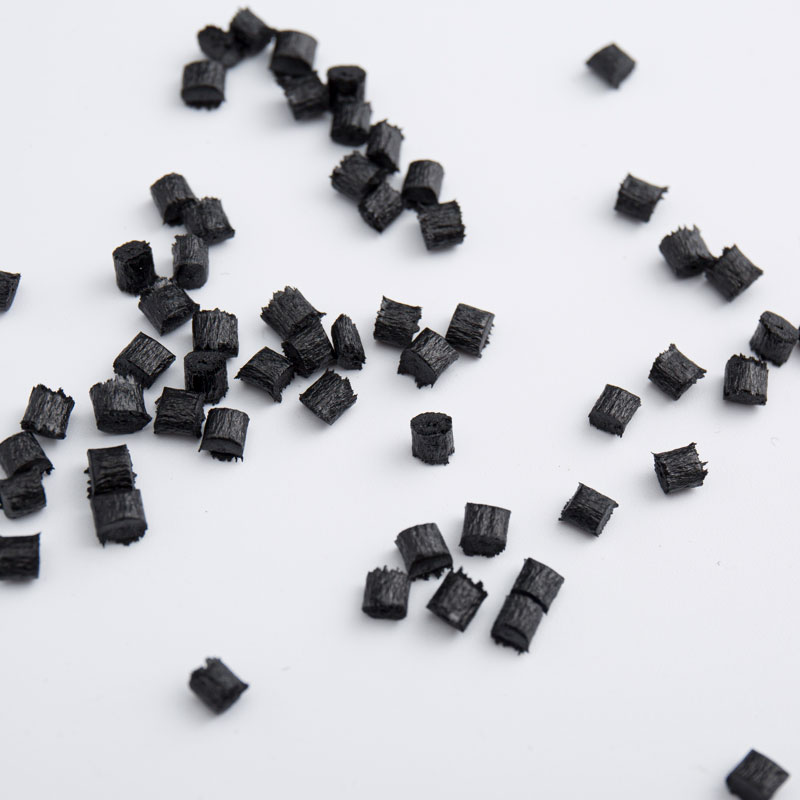
 PA66 GF30 Structural Compound with High Strength and RigidityReinforced with 30% glass fiber, this PA66 grade provides tensile strength above 200 MPa and improved dimensional stability, suitable for structural brackets and other load-bearing applications requiring cost-effective performance.View Product →
Two grades illustrate how the criteria play out in practice. A high-strength high-rigidity PA66-GF30 compound delivers tensile strength above 200 MPa with the weldline performance needed for structural brackets. A PPS-GF45 grade holds rigidity at 220 degrees Celsius, which suits relay housings and pump impellers under continuous load. For deeper selection guidance, this comparison of why engineers choose modified PA plastic pellets explains how reinforcement levels and lubricant packages shift the property balance.
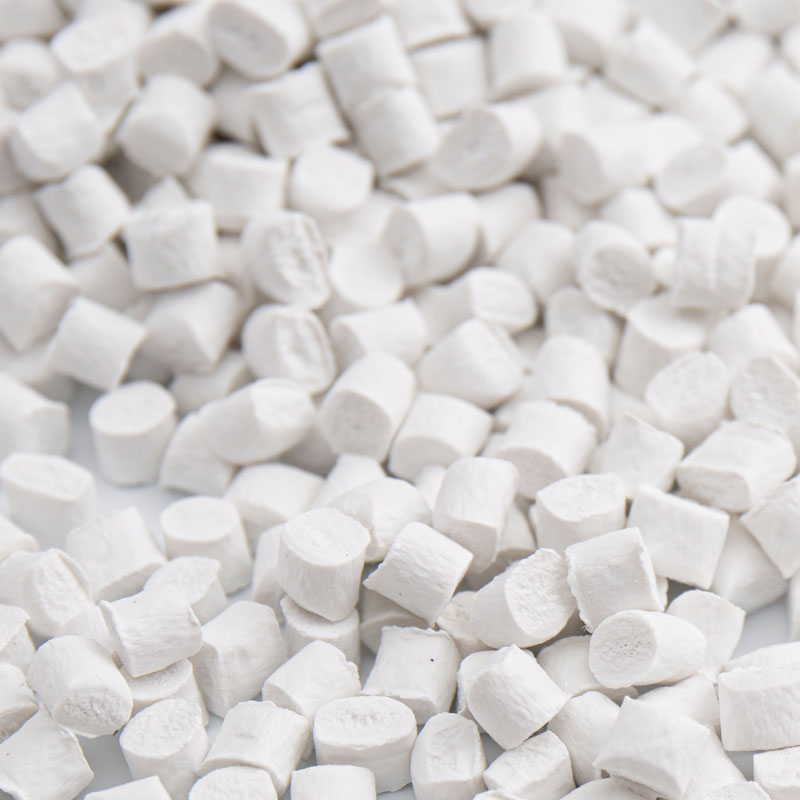
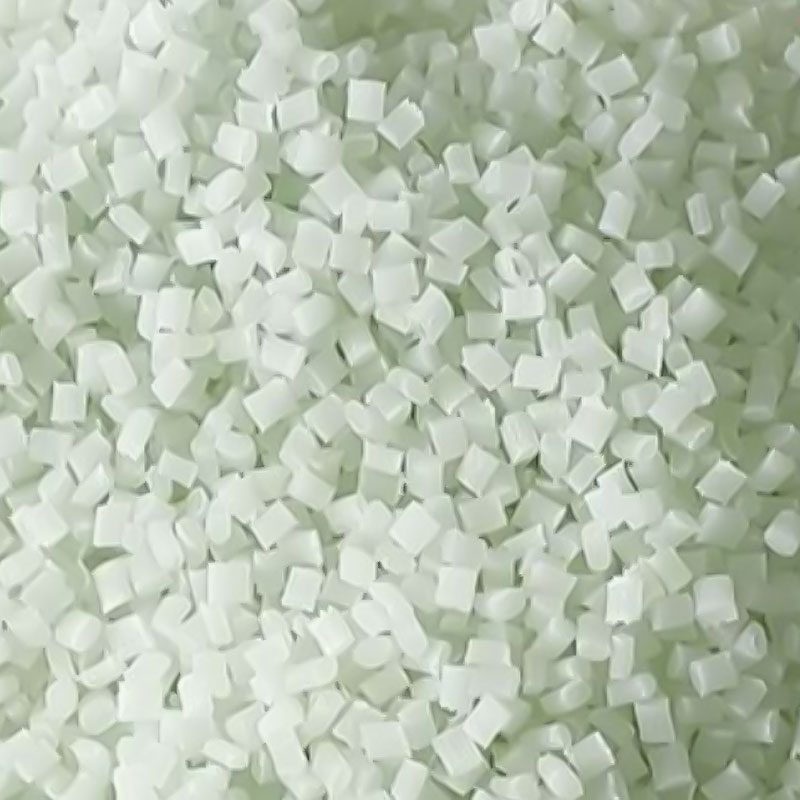
 PPS GF45 for Continuous Rigidity at 220°CWith 45% glass fiber reinforcement, this PPS grade maintains high rigidity and creep resistance under sustained heat, making it dependable for relay housings, pump impellers, and other components requiring long-term thermal stability.View Product →
Ask suppliers for process capability data, not just typical values. A grade showing Cpk above 1.33 on critical dimensions is a grade that will survive mass production without requalification.
Frequently Asked Questions
Which composite material innovations deliver the largest cost impact for manufacturers?
Manufacturing process innovations, specifically hybrid additive-compression molding and rapid thermoplastic consolidation, deliver the largest cost impact because they remove the autoclave bottleneck. Material innovations that raise the upper continuous-use temperature also expand the range of metal parts that can be converted to composites.
Are thermoplastic composites recyclable in practice?
Yes, at industrial scale. Post-industrial regrind from sprues, runners, and rejected parts can be reintroduced at 10 to 30 percent without measurable property loss. Post-consumer recycling works best for single-polymer systems; certified PCR grades with GRS backing are available for PA, PP, PBT, and PEEK-based compounds.
How should procurement teams verify composite material claims from suppliers?
Request batch traceability, third-party test certificates, and process capability data before sampling. Confirm that test specimens were injection molded under the same process parameters your part will use, and ask for retained samples from at least three consecutive batches so your quality lab can run independent verification.
Will the composite materials market keep growing at current rates?
The 8.9 percent global CAGR projection is built on concrete demand drivers: electric vehicle lightweighting, wind turbine blade length, and aerospace backlog. Regional capacity expansions and recycled-fiber economics will determine whether actual growth reaches the high or low end of forecasts.