 EN
 English
 中文简体
 Español

A 2025 review published in Advanced Materials Technologies reported that advanced bio-resins and fibre surface treatments can cut the environmental impact of a composite part by 40 to 60 percent, while digital twins and AI-assisted design reduce development waste further. That figure has pushed sustainability out of the marketing deck and into the material specification, where recyclate content, end-of-life route and service life now sit beside tensile strength and heat deflection temperature.
Zhejiang Lisu Composite Materials Co., Ltd., a modified plastics producer founded in 2015 and certified to IATF 16949, is one of the suppliers now asked to answer those questions in writing. Its catalogue covers glass-fibre and carbon-fibre reinforced PA6, PA66, PP, PBT, PC and POM compounds, plus PPS, PPA and PEEK engineering plastics, a range that shows how far sustainable trends in composite materials have travelled from laboratory curiosity to stocked product line.
What follows are the trends that change real specification decisions, with the numbers, certificates and trade-offs that matter when you are placing an order rather than writing a position paper.
Sustainable Trends in Composite Materials: The Four Levers That Matter
Composite sustainability is measurable in exactly four places: where the feedstock comes from, how efficiently the part is converted, how long it survives in service, and what happens to it at end of life. Everything else, including brand story and colour choices, sits downstream of those four numbers.
Definition
A sustainable composite material is a reinforced polymer system whose environmental footprint is reduced at one or more lifecycle stages, sourcing, conversion, service life or recovery, while still meeting the mechanical, thermal and regulatory performance the application demands.
- Feedstock origin: virgin fossil resin, post-consumer recyclate (PCR), or bio-based resin paired with natural fibre reinforcement.
- Conversion efficiency: scrap rate, in-house regrind re-feed, cycle time and energy consumed per kilogram processed.
- Service life: the number of years or duty cycles a part survives before it is replaced.
- End-of-life recovery: mechanical regrinding, chemical recycling, energy recovery or landfill.
Optimising one lever while damaging another is the most common failure. A bio-fibre reinforced housing that absorbs moisture and is replaced every 18 months carries a worse lifetime footprint than a glass-fibre PA66 part that lasts eight years, even though the bio-filled grade looks better on a feedstock scorecard. Service life multiplies every other gain, which is why it belongs at the top of the specification.
Reported impact reduction by sustainability lever, indicative LCA ranges
Bio-based resin substitution 40-60%
Extended service life 30-45%
Natural fibre reinforcement 28-40%
PCR recyclate content 20-35%
Lightweighting, fuel saving 15-25%
In-plant scrap reduction 10-20%
The ranking shifts with duty cycle and part geometry, but the pattern holds: feedstock substitution is one lever among several, never a strategy on its own.
Recyclable Thermoplastic Composites Are Displacing Thermosets
Thermoplastic composites win on recyclability outright, because they can be remelted and regranulated into the same material family. Thermosets are cross-linked, so once cured they can be ground into filler or sent for energy recovery, but they cannot become a structural part again.
| Criterion | Thermoset composites | Thermoplastic composites |
| Reprocessing | Cannot be remelted, limited to grinding or filler use | Can be remelted and regranulated repeatedly |
| Production scrap | Usually downcycled or discarded | Routinely re-fed in line as regrind |
| Joining and repair | Adhesive bonding, limited weldability | Welding, heat staking, snap-fit assembly |
| Cycle time | Minutes to hours depending on cure | Seconds to minutes in injection moulding |
| Typical matrices | Epoxy, unsaturated polyester, vinyl ester | PA6, PA66, PP, PBT, PC, PPS, PEEK |
In practice this changes the economics of production scrap. Glass-fibre reinforced PP and PA66 compounds accept regrind fractions of roughly 15 to 30 percent in injection moulding without measurable loss of tensile performance, provided moisture is controlled before processing and contamination is excluded. That regrind displaces virgin resin one kilogram for one kilogram.
The modified polypropylene and polyamide families from Zhejiang Lisu are built around exactly that melt-processability. A long-life example is UVC-resistant PP for water tanks, where the material must hold up against ultraviolet light and chlorinated water for the life of the appliance rather than a single service interval.
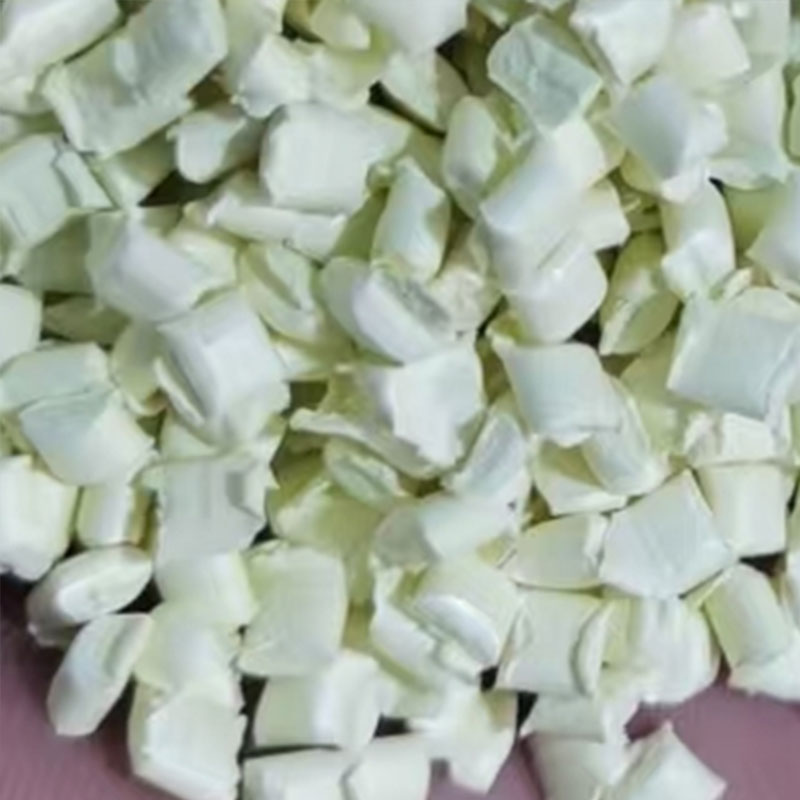 UV-C Resistant Polypropylene Pellets for Durable Water TanksFor water tanks and UV sterilisation parts needing long-life UV-C resistance, this lightweight modified PP offers injection molding and optional transparency.View Product →
Lightweighting: The Highest-Impact Sustainable Trend in Composite Materials
1.36 g/cm3
Density of PA66-GF30, about half that of aluminium
40-60%
Impact reduction reported for advanced bio-resin systems
15-30%
Typical regrind fraction re-fed in moulding
Lightweighting carries the largest verified carbon effect in transport and rotating equipment, because weight saved once keeps saving fuel or electricity for the whole service life. A glass-fibre reinforced polyamide bracket at 1.36 g/cm3 replaces die-cast aluminium at 2.70 g/cm3 or steel at 7.85 g/cm3 for equivalent stiffness once ribs and wall sections are designed for the polymer.
The carbon case only holds when the metal part is genuinely replaced rather than reinforced. Where stiffness rather than ultimate strength governs the design, 30 percent glass-fibre PA66 grades are the standard starting point, and carbon-fibre grades are reserved for parts where the weight premium can be justified on performance grounds.
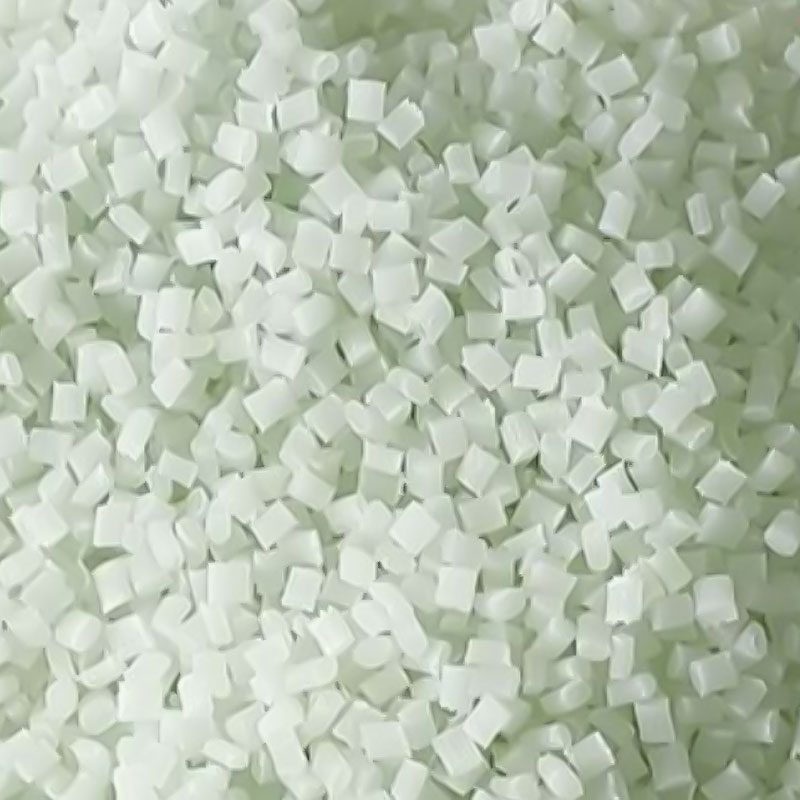 Glass-Fibre Reinforced PA66 GF30 for High-Strength ComponentsA cost-effective glass-fibre PA66 grade for stiffness-critical brackets, housings and structural parts where metal replacement and durability reduce lifecycle impact.View Product →
Service Life Is the Most Underrated Metric in Composite Sustainability
Durability is the cheapest carbon reduction available to a composites buyer, because doubling a part's service life removes an entire production cycle from the system. For high-temperature industrial components, that is where PEEK, PPS and PPA earn their price.
Polyether ether ketone (PEEK) holds usable mechanical properties up to roughly 250 degrees Celsius in continuous service, and carbon-fibre reinforced grades such as PEEK-CF30 carry high loads at those temperatures. Where a bronze or stainless-steel bushing is replaced by a machined PEEK rod or plate, part weight drops by a factor of six or more, lubrication can be eliminated, and the wear component leaves the corrosion-management programme entirely.
The same logic pulls high-performance plastic pellets into pumps, valves and water-treatment equipment, where a part that survives the life of the unit is cheaper in carbon terms than a part that is serviced three times.
Under-the-hood applications follow the same rule. PPS with 45 percent glass fibre and heat-resistant PPA with 30 percent glass fibre exist to keep components in service at 150 degrees Celsius and above, well past the point where a commodity resin would deform and require replacement.
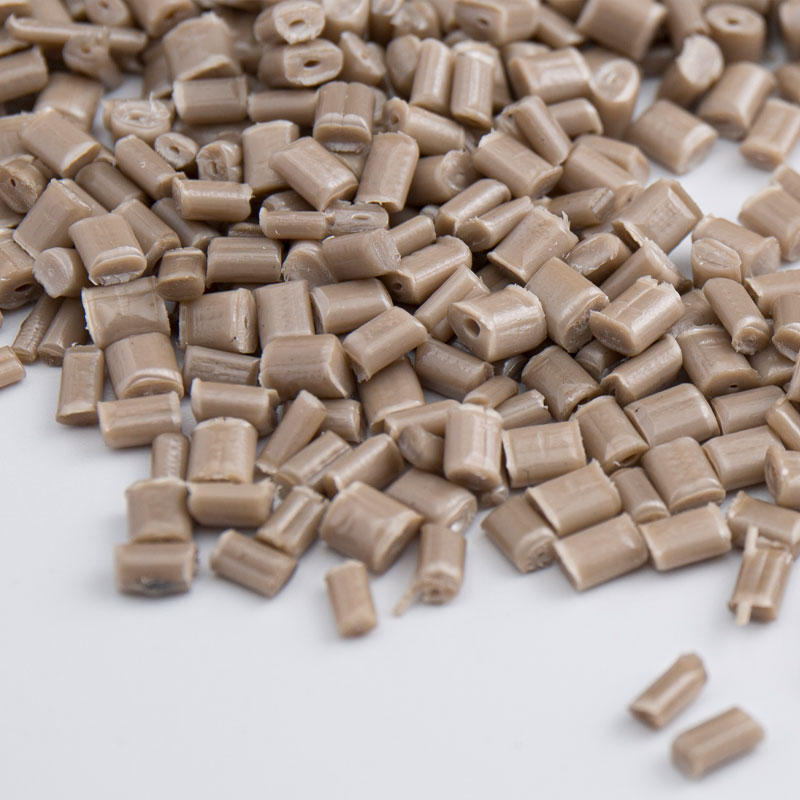 Pure PEEK Resin for Chemical, Fatigue and Purity DemandsFor seals, medical and food-contact parts needing chemical resistance, fatigue performance and sterilizability, this pure PEEK grade favors toughness and purity over maximum rigidity.View Product →
Recycled and Bio-Based Feedstocks: What Is Verifiable Today
Recyclate content is now a documented supply-chain input rather than a claim. Buyers ask for the certificate, the percentage and the batch record, and suppliers who cannot produce all three lose the order.
- Global Recycled Standard (GRS) chain-of-custody certification for PCR content.
- IATF 16949 quality management approval for automotive programmes.
- CQC material certificates covering safety and performance requirements.
- Per-batch test reports confirming the properties written into the specification.
Zhejiang Lisu Composite Materials Co., Ltd. holds GRS certification for PCR material, IATF 16949 and a set of CQC material certificates, and it runs custom formulation from bench trial and small-batch testing through to mass production. That flow matters for sustainability work, because recycled and bio-based feedstocks rarely drop into an existing formulation without rebalancing impact modifiers and stabilisers.
Verification is also why the innovation and sustainable development programme is documented at batch level rather than product level. A specification that cannot be traced to a production record is a preference, not a requirement.
How to Audit a Composite Supplier Before You Add a Sustainability Clause
Audit the paper trail before you audit the material. Sustainability clauses fail in practice because they are written in adjectives rather than numbers, which leaves no way to accept or reject a delivery.
Claim you will hear
- Recycled content
- Lower carbon footprint
- Long service life
- Consistent quality
Evidence to request
- GRS certificate naming the PCR percentage and the batch
- Third-party verified carbon footprint per kilogram of compound
- Ageing data for hydrolysis, UV and heat at the real duty temperature
- IATF 16949 certificate plus per-batch mechanical test reports
Two further checks close most of the remaining gap. Ask for ageing data at the temperature and medium the part will actually see, and confirm that the supplier can repeat the formulation at production scale rather than only in a laboratory batch, since scale-up is where recycled and bio-based feedstocks most often drift out of specification.
FAQ: Sustainable Trends in Composite Materials
Are thermoplastic composites actually recyclable in practice?
Yes. Mechanical regrinding and re-compounding of PA, PP and PBT production scrap is standard industrial practice, and post-consumer streams are increasingly viable through GRS-certified PCR grades. Mixed-polymer contamination remains the main technical limit, which is why sorted single-polymer streams command the highest recyclate value.
Does recycled content reduce mechanical performance?
Below roughly 30 percent regrind, tensile strength and impact performance of glass-fibre reinforced PA66 and PP stay inside normal batch variation. Above that level, fibre length attrition reduces impact strength, so structural parts are usually specified with virgin or low-regrind grades.
Which composite material has the lowest lifetime footprint?
It depends on the duty cycle. For a component that must survive ten years at 150 degrees Celsius, PPS or PPA outperforms any bio-based alternative because replacement dominates the footprint. For a short-life consumer housing, bio-filled or PCR polypropylene is normally the lower-impact choice.
How do I write a sustainability clause into a material specification?
State the recyclate percentage together with the certification standard, name the end-of-life route you will accept, and list the ageing tests required. Put those numbers in the specification sheet and require per-batch reports, otherwise the clause cannot be enforced at goods-in inspection.