 EN
 English
 中文简体
 Español

Epoxy composite demand reached USD 42.14 billion in 2024 and is projected to reach USD 92.42 billion by 2035, yet the growth is no longer concentrated in aerospace prepreg. It sits in compounds that run on standard injection molding and extrusion equipment, carry a published flammability file, and survive a regrind cycle. That is the filter worth applying when you shortlist the latest trends in composite materials for a program that has to ship.
Procurement teams rarely lose money on headline properties. They lose it on cycle time, batch spread and paperwork. A grade rated at 220 MPa that needs a 25 minute cure will never fit a 45 second molding cycle, and a compound without lot level test reports will not clear an automotive audit.
A composite material is a polymer matrix combined with reinforcement such as glass fiber, carbon fiber or mineral filler, plus functional additives, formulated so the finished part outperforms the base resin in stiffness, heat deflection or wear resistance.
USD 92.4BProjected epoxy composite market value by 2035
30-50%Typical fiber loading in structural compounds
9% vs 92%Tensile retention after regrind: cured thermoset against PP-GF30
Latest Trends in Composite Materials That Change a Purchase Order
Only three trends published this year change what a buyer actually orders: thermoplastic matrices replacing thermosets, fiber loading climbing into the GF40 to GF50 range, and recycled content arriving with certificates attached. Everything else is still a laboratory result.
- Matrix swap. Filled PA6, PA66, PP, PBT, PPS and PEEK compounds now cover parts that used to be epoxy or unsaturated polyester. Cycle time and end of life handling drive the change, not peak strength.
- Reinforcement density. 40 to 50 percent glass fiber and 20 to 30 percent carbon fiber grades have moved from specialty quotes into catalogs, with published shrinkage data.
- Functional additives. PTFE and MoS2 for self lubrication, halogen free flame retardants, permanent antistatic packages and high CTI formulations are standard options rather than development projects.
- Documentation. IATF 16949 quality systems, recycled content certificates and CQC material certificates now appear in RFQ checklists before tensile data does.
The grade that wins a program is rarely the strongest one. It is the one whose tolerance window, cycle time and paperwork all fit at the same time.
Thermoplastic Composites Keep Taking Volume From Thermosets
Thermoplastic composites are winning serial production because they can be melted, molded and re-melted, while a cured thermoset cannot be reprocessed at all. The practical result is a cycle time gap of one to two orders of magnitude.
A cross linked epoxy laminate typically needs 20 to 30 minutes of cure under heat and pressure. Sheet molding compound needs 2 to 4 minutes. Thermoplastic stamp forming lands at 60 to 90 seconds, and injection molded grades such as glass and carbon filled polyamide compounds complete a cycle in 30 to 60 seconds with no secondary trimming.
Tensile strength retention after one regrind cycle, percent
PP-GF3092
PPS-GF4588
PBT-GF3085
PA66-GF3078
Cured epoxy9
Indicative retention values after one full regrind cycle; confirm against lot specific test data before releasing a specification.
Regrind from a thermoplastic part is feedstock. Scrap from a cured thermoset is a disposal invoice.
Fiber Loading Has Moved From GF30 to GF50 and Carbon Grades
Forty to fifty percent glass loading is now routine in structural parts. Moving from GF30 to GF50 typically raises tensile strength and stiffness by 20 to 25 percent, raises density by about 14 percent, and cuts mold shrinkage by close to a third. The trade off is faster screw and barrel wear, so plan on wear resistant tooling surfaces at the higher loadings.
| Grade | Tensile strength (MPa) | HDT at 1.8 MPa (C) | Density (g/cm3) | Typical part |
| PA66-GF30 | 185 | 250 | 1.37 | Brackets, housings, covers |
| PA66-GF50 | 230 | 255 | 1.56 | High stiffness frames, structural covers |
| PPS-GF45 | 200 | 265 | 1.65 | Pump housings, hot appliance parts |
| PEEK-CF30 | 260 | 315 | 1.40 | High load bushings, wear rings |
 PA66 GF50 Glass Fiber Reinforced Pellets50% glass fiber reinforced PA66 pellets for high-strength, dimensionally stable industrial parts; compare with GF30 when higher stiffness and lower shrinkage matter.View Product →
Carbon fiber buys stiffness at lower weight and adds conductivity. Glass fiber buys the same stiffness at lower cost and at higher density.
Above 150 C, Reinforced Polymers Replace Machined Metal
PPS, PPA and PEEK compounds now carry structural loads continuously at 150 to 260 degrees Celsius, which lets designers delete machined metal parts and the secondary operations that follow them. The weight argument is straightforward: a reinforced PEEK grade runs near 1.4 g/cm3 against 7.85 g/cm3 for steel and 2.7 g/cm3 for aluminium.
PPS-GF45 holds 200 to 220 degrees Celsius continuously with high rigidity, and it covers most pump housings, hot appliance components and chemically exposed brackets at a moderate cost.
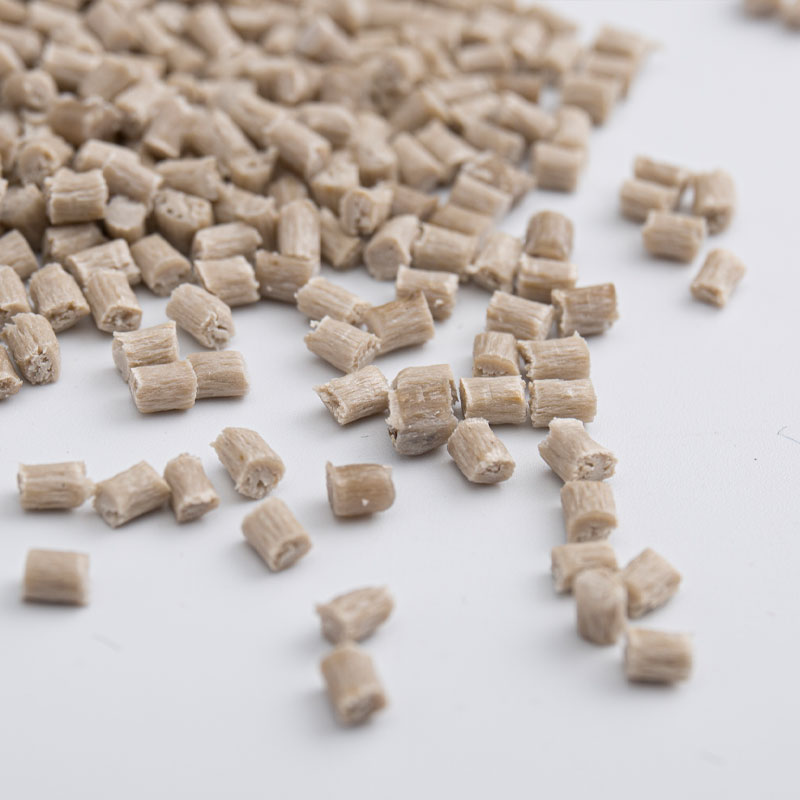
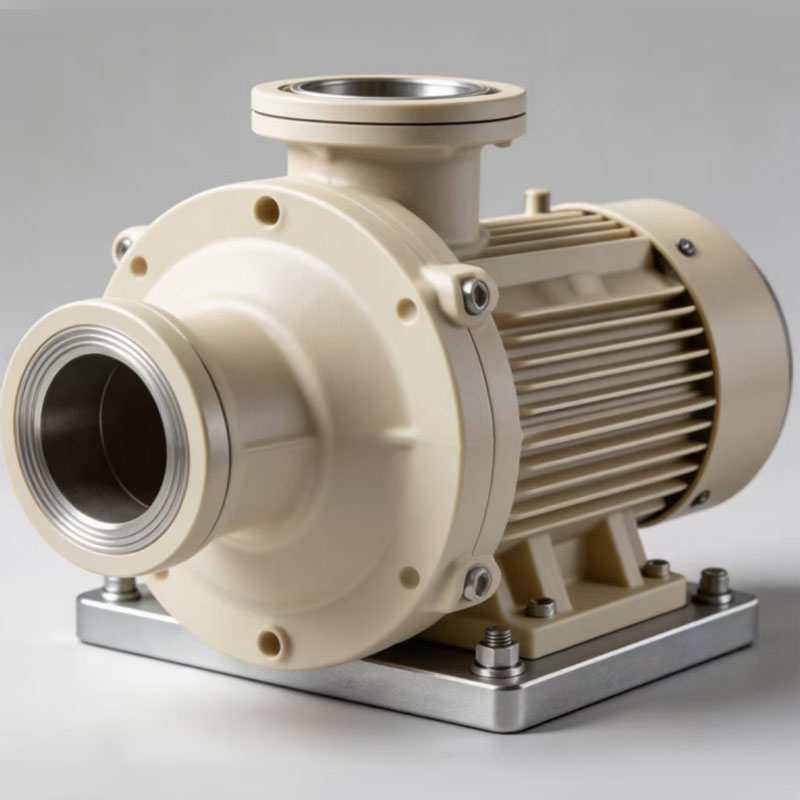 PPS GF45 High-Temperature High-Rigidity Plastic Pellets45% glass fiber reinforced PPS pellets for high-rigidity parts needing continuous heat and chemical exposure; consider before moving to higher-cost PEEK.View Product →
PEEK is the step up. Carbon reinforced grades are specified above 250 degrees Celsius, in steam and aggressive chemical service, and wherever wear resistance under continuous load decides part life. PEEK rod and plate stock also lets a team machine prototypes before committing to a mold.
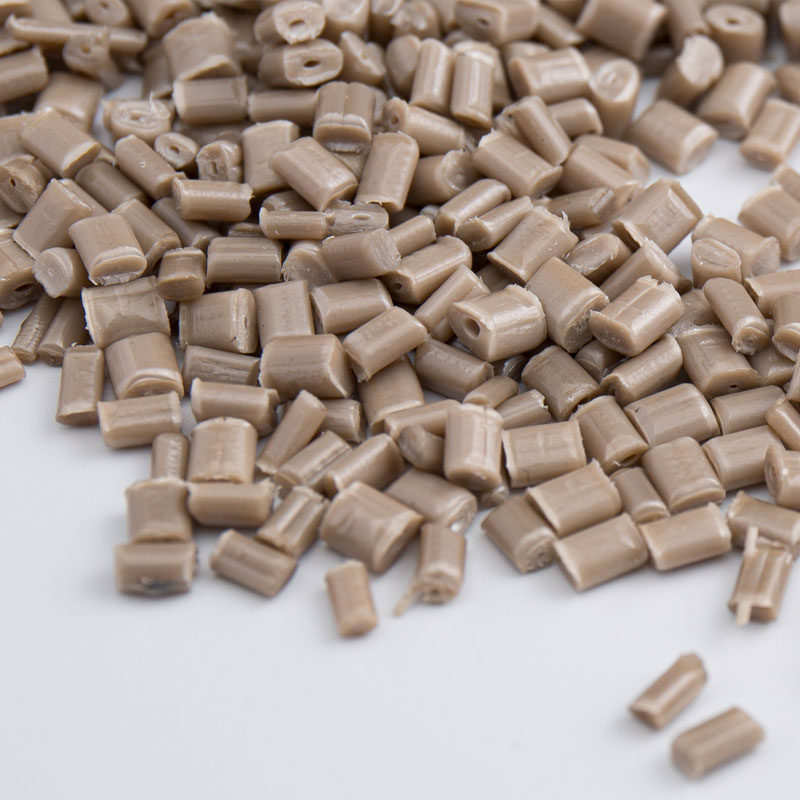 PEEK Plastics: Pellets, Rods, Plates, and Modified GradesExplore PEEK pellets, rods, and plates across glass, carbon, PTFE, and graphite grades for high-temperature, wear, and chemical-service needs; includes molding guidance.View Product →
Metal replacement is rarely decided by a single temperature rating. Creep under continuous load at temperature is what separates two grades with identical datasheet headlines.
Recycled Content Now Arrives With Certificates, Not Claims
Post consumer recycled (PCR) content has moved from a marketing slide into the specification, and it only counts when the documentation follows it. Global Recycled Standard (GRS) certification, lot level mechanical test reports and a declared regrind ratio are what auditors ask for.
- Specify the recycled fraction as a range, for example 30 to 50 percent PCR, and require the certificate to match the delivered lot.
- Price the property loss in advance: one regrind cycle typically costs 5 to 15 percent of tensile and impact performance in glass filled PA and PP.
- Keep virgin and recycled lots on separate silos and separate material codes. Silent mixing is the fastest route to a failed audit.
Recycled content is a specification now, not a slogan: if the certificate does not match the lot number, the material does not qualify.
Qualifying a New Grade in Six Weeks Instead of Six Months
Most qualification delays come from a vague requirement rather than from the material itself. A grade can be approved in six weeks when the requirement is frozen before the first sample is ordered.
- Freeze the requirement in numbers: continuous service temperature, load, chemical exposure, the target UL 94 rating, and the machine that will run the part.
- Request the current datasheet, a 25 kg sample and a lot certificate. Check fiber content, moisture specification and shrinkage against your process window.
- Run a pilot mold or extrusion at production cycle time and measure warpage, weld line strength and dimensional spread, not only tensile bars.
- Test three consecutive lots for tensile, impact and heat deflection to see the real batch spread instead of a single data point.
- Collect the paperwork: IATF 16949 certificate, RoHS and REACH statements, UL yellow card reference, and the recycled content certificate where applicable.
- Lock the incoming inspection specification and qualify a second source before volume ramps.
A grade that passes on one lot and drifts on the next is not qualified. It is a schedule risk with a part number.
Latest Trends in Composite Materials: Buyer Questions
Which reinforcement gives the best stiffness for the money?
Glass fiber. At 30 to 50 percent loading it delivers most of the stiffness gain per unit of cost. Carbon fiber earns its premium when you need the same stiffness at lower weight, when you need electrical conductivity, or when thermal expansion has to be matched to a metal mating part.
Can recycled compound match virgin material?
Within 5 to 15 percent on tensile and impact after one regrind cycle, and the gap widens with each additional cycle. Design the part around the recycled property floor rather than the virgin datasheet and the switch is safe.
Is PEEK always the better choice over PPS?
No. PPS-GF45 costs considerably less and holds 200 to 220 degrees Celsius continuously. PEEK earns its price above 250 degrees Celsius, in steam and chemical service, and where wear resistance under load decides part life. Choosing PEEK for a 180 degree housing adds cost with no benefit.
How much does fiber loading change shrinkage?
Raising glass content from 30 to 50 percent typically cuts mold shrinkage by about a third and narrows the difference between flow and cross flow directions. The trade off is higher melt viscosity and faster screw and barrel wear.
Match the grade to the cycle and the audit trail, not to the brochure.