 EN
 English
 中文简体
 Español

Four quotes sit on the same procurement desk: 6061-T6 aluminum machined to print at about 6 USD per kilogram, a 30 percent glass-filled polyamide at roughly 3.5 USD, a PA66-GF50 compound near 5 USD, and a carbon fiber reinforced PEEK grade above 90 USD. A decade ago that comparison ended with part mass and unit cost. Today it ends with a harder question: which of these materials can still be reprocessed, welded, and re-specified when the platform changes in year three?
That question is what is moving composite material technology forward. The matrix is migrating from thermoset chemistry to thermoplastics, reinforcement is migrating from chopped strand to continuous fiber, and the commercial case is migrating from lowest mass to lowest mass that survives a supply chain audit. Compounders such as Zhejiang Lisu Composite Materials Co., Ltd., which runs glass-filled and carbon-filled polyamide, PPS, PPA and PEEK lines under an IATF 16949 quality system, now publish data sheets that read as much like a compliance file as a mechanical property table.
12% Forecast annual growth for thermoplastic composites through 2032, against roughly 7 percent for the composites market as a whole. Growth has moved from aerospace-heavy to volume-driven, which changes who signs the purchase order.
Thermoplastic composites are the fastest-growing segment of the composites market, and the reason is process economics rather than peak mechanical performance. A thermoplastic matrix consolidates in minutes instead of curing for hours, it can be welded instead of adhesively bonded, and it can be remelted at end of life.
| Variable | Thermoset matrix (epoxy, polyester, vinyl ester) | Thermoplastic matrix (PA, PBT, PPS, PEEK) |
| Consolidation time | 60 to 360 minutes in an autoclave or oven | 2 to 10 minutes in a press or tape placement head |
| End-of-life route | Cross-linked, so grinding and filler reuse only | Remeltable, so polymer and fiber can be recovered |
| Storage | Frozen prepreg, 6 to 12 months of shelf life | Ambient storage, no practical expiry |
| Impact behavior | Brittle, microcracking under repeated load | Higher fracture toughness, damage tolerant |
| Joining method | Adhesive bonding or mechanical fasteners | Ultrasonic, laser and induction welding |
| Service temperature | 120 to 180 degrees C typical | 120 to 250 degrees C, PEEK at the top of the range |
| Relative material cost | Index 1.0 | Index 1.3 to 4.0 depending on polymer |
Thermosets have not lost their place. Large single-piece aerostructures, polyimide matrices above 300 degrees C, and low-volume parts where tooling cost dominates still favor a curing resin. The shift is that thermosets are no longer the default answer for a new program, only the answer for a specific set of constraints.
The recyclability gap has turned into a commercial gap: a part that cannot be reprocessed is now a liability on a bill of materials, not an environmental footnote.
Where Composite Material Technology Grows Fastest Through 2032
Automotive and water infrastructure will absorb the largest volume growth in composite material technology through 2032, while aerospace and medical applications keep capturing the highest value per kilogram. Volume and margin have split into two different races, and a supplier that serves only one of them becomes fragile when a single end market slows.
50%Share of structural airframe mass carried by composite material on the Boeing 787 and the Airbus A350.
6-8%Fuel saving commonly attributed to every 10 percent cut in vehicle mass, the core driver of metal replacement.
90+ USD/kgTypical band for carbon fiber reinforced PEEK, against 3 to 6 USD for glass-filled engineering resins.
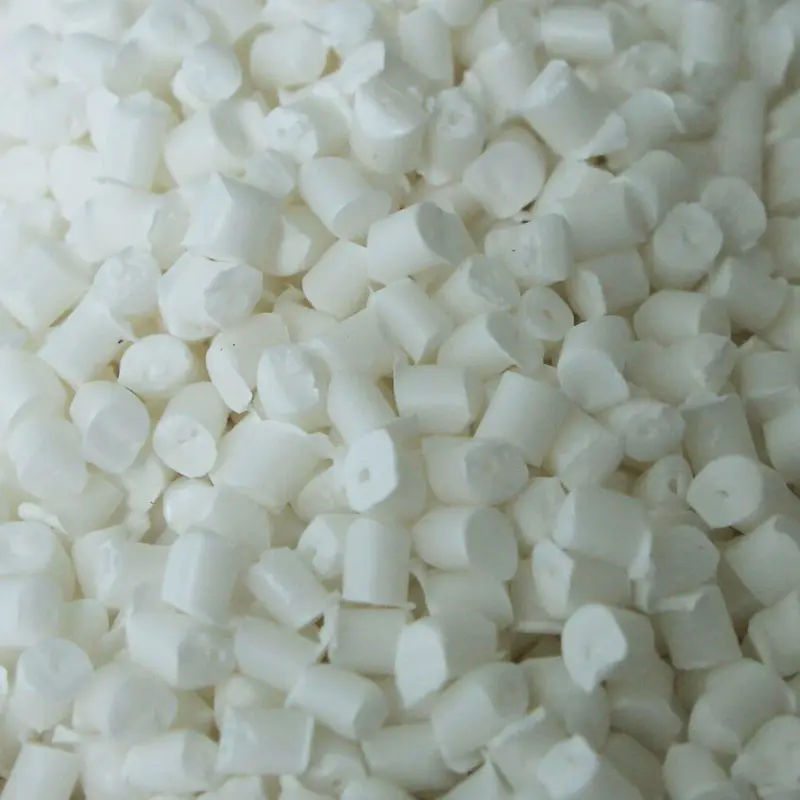
Water treatment is the segment most buyers overlook. A drinking water tank or a filter housing sits outdoors for a decade, absorbs ultraviolet radiation, and must stay compliant with potable water contact rules. That combination turns UV-stabilized polypropylene compound into a specification item rather than a commodity purchase, and it is why the water and infrastructure line in the chart above grows on volume rather than on novelty.
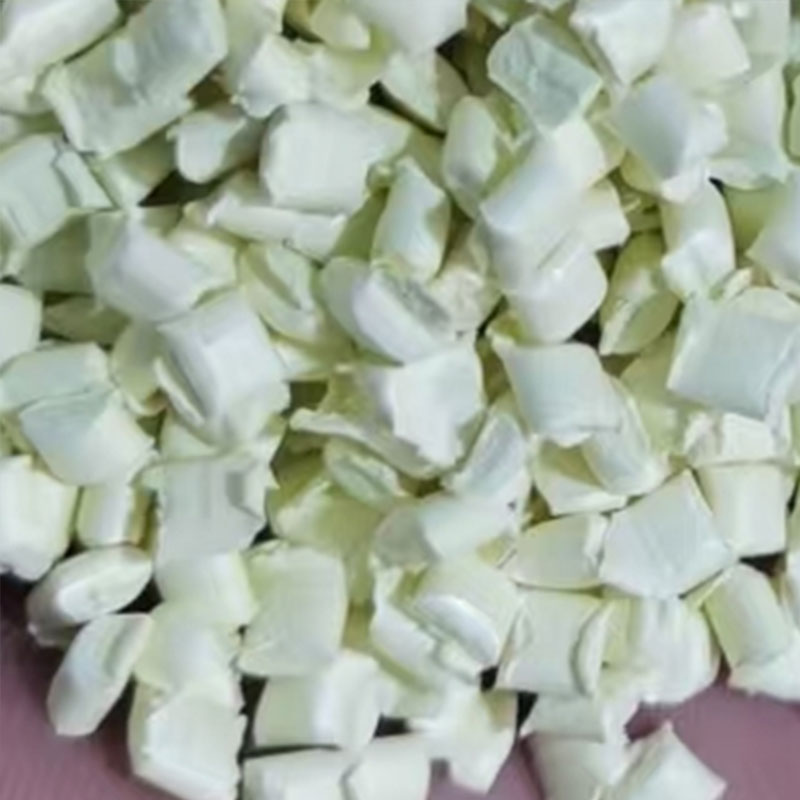 UV-C Resistant PP Pellets for Water TanksModified polypropylene compound with UV-C stabilization for potable-water tanks, injection moulding, and outdoor water-treatment equipment requiring durable food-grade contact compliance.View Product →
Short-Fiber Compounds or Continuous Fiber Laminates
Choose by load path: short-fiber compounds win for complex three-dimensional geometry below roughly 100 MPa, while continuous fiber laminates win for directional loads above 300 MPa. Buying a laminate for a bracket wastes money, and buying a compound for a leaf spring wastes the design.
Short-fiber compounds
- Fiber length 0.2 to 1 mm, randomly oriented in the melt
- Tensile modulus 6 to 12 GPa, close to isotropic in the plane
- Injection molded, so ribs, bosses and snap fits come free
- Cost low enough for housings, connectors and pump bodies
- Data sheet values describe the molded part, not a laminate
Continuous fiber laminates
- Continuous tow laid in a designed fiber architecture
- Tensile modulus 40 to 140 GPa along the fiber axis
- Consolidated from tape, so geometry limits to shells and beams
- Material cost high, and automation cost higher still
- Properties are direction dependent and need laminate analysis
Definition
A composite material is a polymer matrix plus a reinforcement that carries the load. The matrix transfers stress between fibers, protects them from moisture and abrasion, and sets the temperature ceiling of the finished part. In a thermoplastic composite, that matrix can be melted and re-formed, which is the single property that separates the current generation of materials from the previous one.
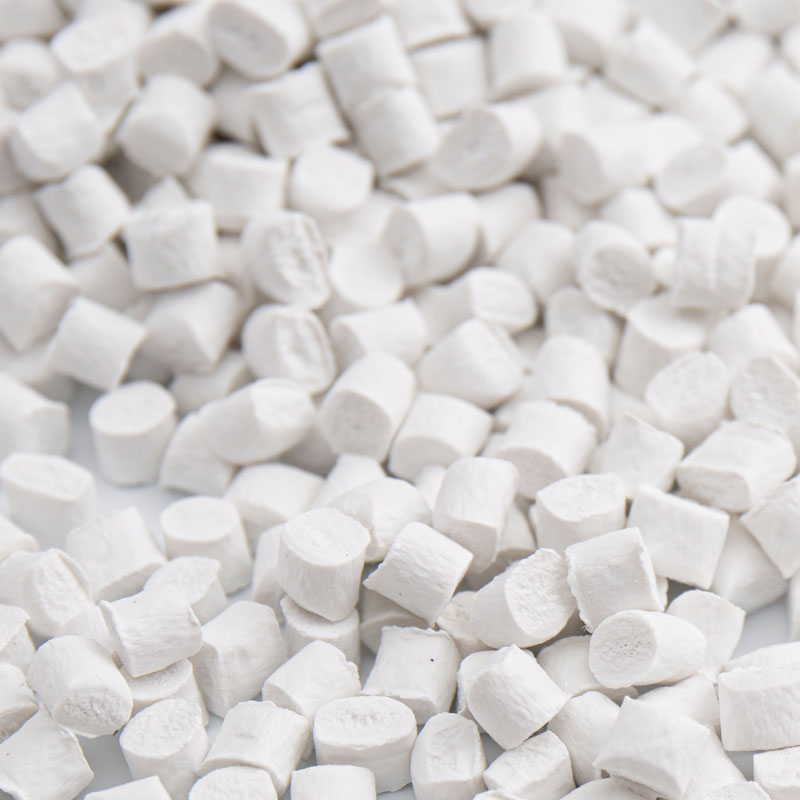
For structural parts that must hold tolerance across a wide temperature range, the practical middle ground is a highly filled engineering compound. Glass loadings of 50 percent push a polyamide into the stiffness range of die-cast aluminum while keeping the molding cycle under a minute.
 High Dimensional Stability PA66 GF50 Plastic PelletsGlass-fiber-reinforced PA66 compound for metal replacement in gears, housings, pumps, and valves where stiffness, creep resistance, and heat resistance drive design.View Product →
High-Temperature Polymers Set the Ceiling for Composite Material Technology
Between 150 and 250 degrees C, the matrix stops acting as a binder and becomes the limiting design variable. Fiber reinforcement does not raise the service temperature of a part; the polymer does, and only a handful of polymers are qualified to do it.
- Modified PPA with 30 percent glass: continuous use near 150 to 180 degrees C, low moisture uptake, suited to underhood connectors and sensor housings.
- PPS with 45 percent glass: continuous use near 200 to 220 degrees C, inherent flame retardancy, strong chemical resistance but limited impact toughness.
- PEEK with 30 percent carbon fiber: continuous use near 250 degrees C, high load capacity and wear resistance, priced at the top of the range.
Metal replacement decisions usually turn on abrasion and creep rather than raw strength. Machined PEEK rod and plate have become a standard answer for pump bushings, valve seats and semiconductor fixtures, because the stock can be turned and milled like a metal and a machined prototype can be validated in days instead of the weeks an injection mold requires. Published comparisons of how PEEK sheet performs against metal and standard engineering plastics show the same pattern: the win comes from wear life and dimensional stability, not from a headline strength number.
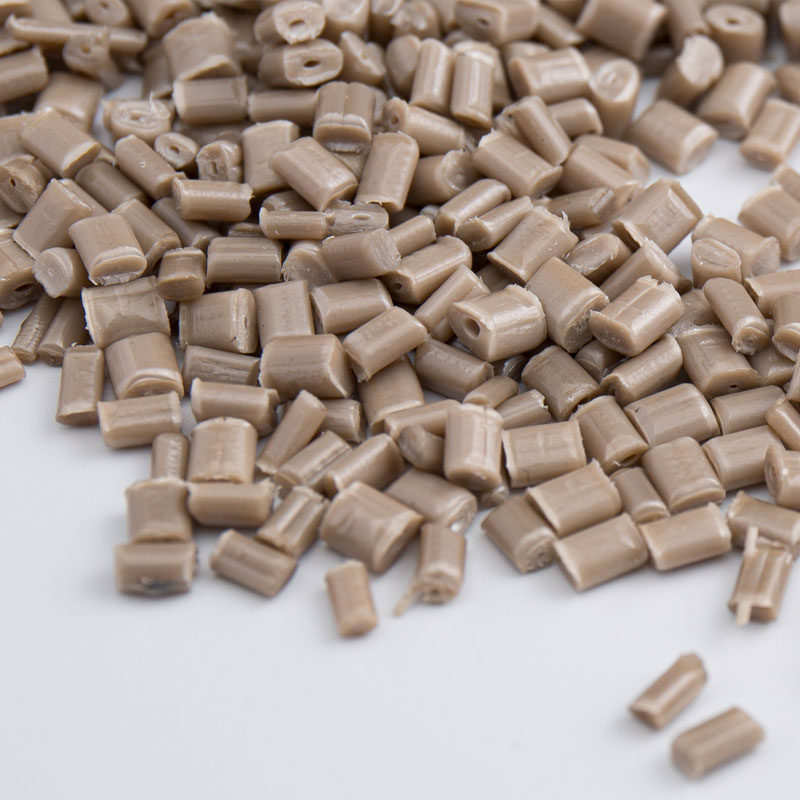 PEEK Plastic Pellets, Rods, Sheets, and CompoundsUnfilled and reinforced PEEK grades plus rod and plate stock for pump bushings, valve seats, semiconductor fixtures, and wear-resistant machined prototypes.View Product →
Purchasing reality
A bushing that survives five maintenance intervals can cost ten times more per kilogram than a replacement part and still be the cheaper decision, because the avoided downtime dwarfs the material premium.
Self-Healing Composites: What Is Shippable in 2026
Self-healing composites are real in laboratories and still absent from production bills of materials. Vascular networks, microcapsules and reversible Diels-Alder chemistry all restore 60 to 90 percent of virgin strength in published tests, but healing efficiency collapses after the first cycle, and none of it survives a cost review on a part that sells for less than 20 USD.
The version of self-repair that has reached production is welding. A thermoplastic part can be repaired in the field with ultrasonic or induction equipment, restoring the joint rather than the whole laminate, and the repaired zone can be inspected immediately with the same equipment that made it.
Field data
Reported static strength retention for welded thermoplastic joints sits in the 70 to 90 percent range of the parent laminate, which is why weldable structures entered service years before self-healing chemistry left the laboratory.
Recyclability Is Rewriting Composite Material Technology Procurement
Recycled content has become a scored line item in automotive, consumer electronics and packaging supply agreements, and it is the fastest-moving requirement in composite material technology sourcing. A compound that cannot be quoted with a verified recycled fraction is now a commercial risk in a tender, not a technical preference.
Certification carries the weight. Global Recycled Standard documentation for post-consumer recycled resin, IATF 16949 for automotive quality management, and CQC product certificates are typically requested before a sample is even molded. A mechanically equivalent compound without paperwork loses to a slightly weaker compound with a documented chain of custody.
What to Put in a Recycled Content Specification
- State the recycled content percentage and the standard it is certified against, with the certificate number on the data sheet.
- Require batch level traceability rather than lot averages, because consistency per bag is what protects a molding line from scrap.
- Ask for mechanical data measured on the recycled grade itself, not on a virgin reference grade from the same material family.
- Confirm the processing window stays inside the existing tool, or the recycled grade becomes a new mold and a new capital request.
- Fix the supply commitment in the contract, since recycled feedstock pricing tracks collection volumes rather than oil prices.
Frequently Asked Questions
Will thermoplastic composites replace aluminum in mass-market vehicles?
Not entirely, and not soon. Glass-filled polyamide has already replaced aluminum in brackets, housings and intake components where stiffness per dollar matters more than stiffness per kilogram. Body panels remain aluminum and steel territory, because sheet metal is welded, painted and recycled inside an infrastructure that composites cannot match on cost today.
Are composite materials actually recyclable at scale?
Thermoplastic composites are, thermoset composites largely are not. Remelting recovers polymer and fiber from a thermoplastic part, and recycled polyamide and polypropylene compounds at 30 to 50 percent recycled content now match virgin mechanical properties closely enough for semi-structural parts. Thermoset scrap is still mostly ground into filler.
Why does PEEK cost more than ten times a glass-filled polyamide?
The monomer route is expensive, the polymerization is demanding, and the qualified supply base is small. The justification is never price per kilogram. It is a creep or wear limit that no cheaper polymer can meet, inside a part where the cost of access for replacement exceeds the cost of the material itself.
What is the biggest barrier to self-healing composites?
Repeatability under real conditions. Healing chemistry that works in a controlled laboratory specimen has to survive thermal cycling, ultraviolet exposure and damage that is never as clean as a test coupon. Until that gap closes, the practical self-repair mechanism for thermoplastic structures remains welding.