 EN
EN English
 中文简体
中文简体 Español
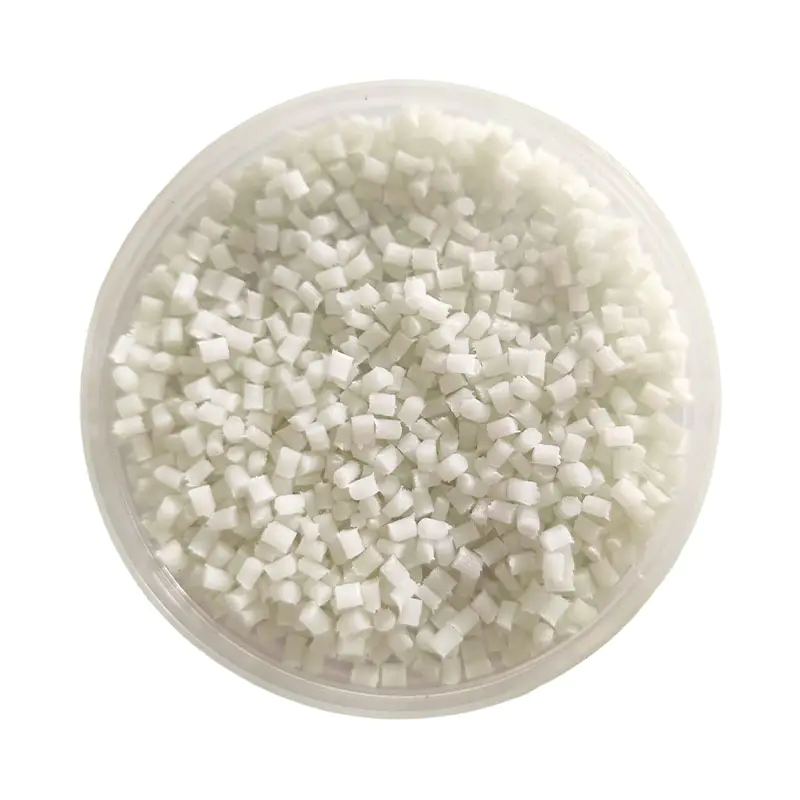
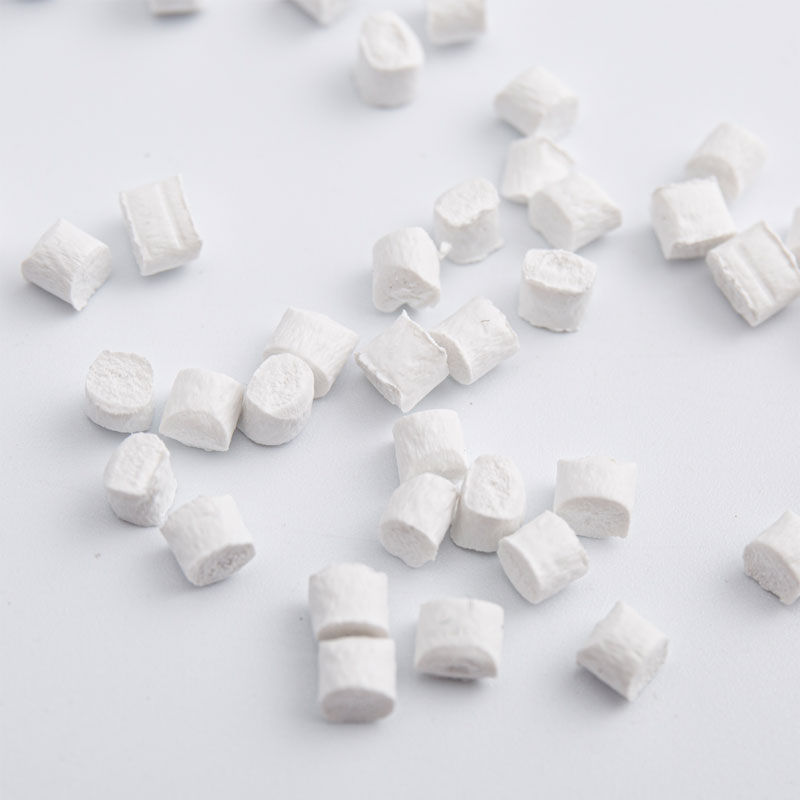
A transmission sump runs at 150°C for thousands of hours. An EV battery connector sits centimeters from cells that spike in temperature during fast charging. A pump gear slides against a metal shaft with no external lubrication. These conditions push standard nylon past its limit, and they are why more design engineers are specifying modified PPA plastic pellets. PPA, or polyphthalamide, is a semi-aromatic polyamide that keeps its stiffness, strength, and dimensional stability at temperatures where PA66 softens and creeps. This article covers the main grades of modified PPA pellets, their characteristic properties, and the selection criteria that separate a sound material choice from a field failure.
What Makes Modified PPA Different from PA66?
Polyphthalamide is produced by condensing terephthalic acid with diamines, which places aromatic rings along the polymer backbone. That structural change improves three properties that matter in high-temperature applications:
- Heat deflection temperature: a 30% glass-reinforced PPA typically shows an HDT above 280°C at 1.82 MPa, versus roughly 245°C for PA66-GF30 and about 210°C for PBT-GF30.
- Moisture absorption: PPA picks up about 0.3-0.5% at saturation, compared with 2.5-3.0% for PA66. Less absorbed water means tighter dimensional control and more stable mechanical properties in humid environments.
- Creep resistance: the aromatic backbone slows chain movement, so bolted joints and press-fit assemblies retain torque and interference longer at elevated temperatures.
The trade-offs are cost and processing temperature. PPA compounds are more expensive than PA66 and require melt temperatures in the 310-340°C range. If your part stays below 90°C in ordinary humidity, a standard nylon or PBT grade is usually the more economical choice.
Standard Modified PPA Grades and Their Properties
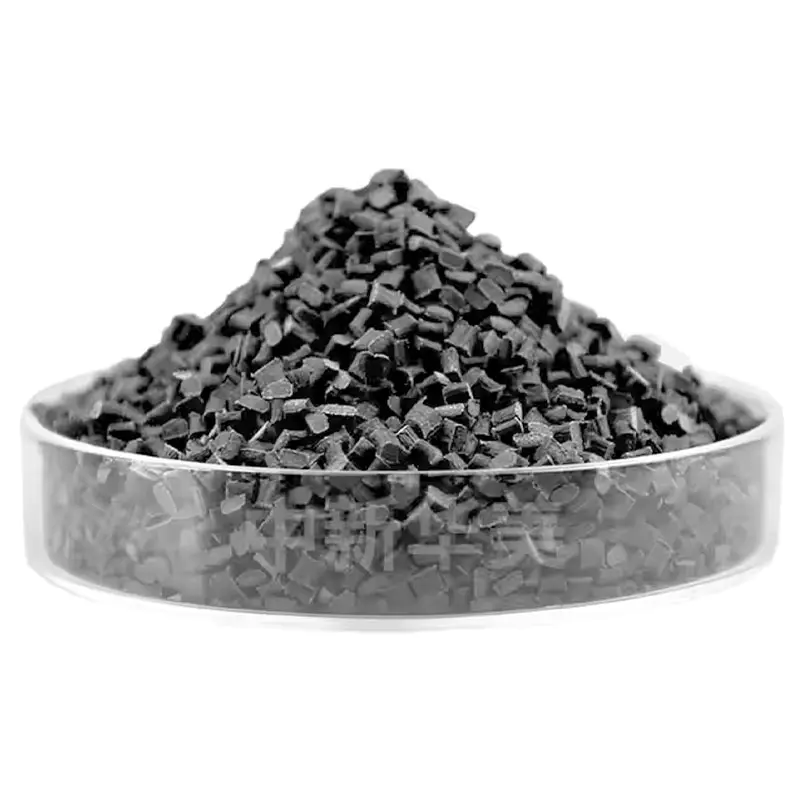
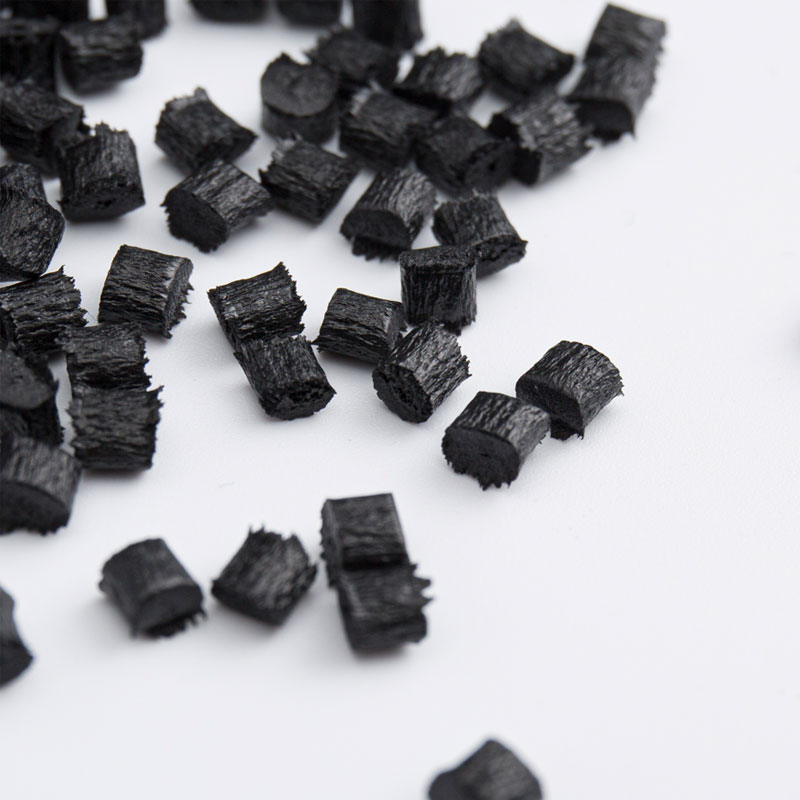
Modified PPA pellets are typically sold as compounds built around three reinforcement strategies: glass fiber for stiffness and heat resistance, carbon fiber for conductivity and dimensional control, and PTFE for friction and wear management.
| Grade | Key Modification | Main Characteristics | Common Applications |
|---|---|---|---|
| PPA-GF30 | 30% glass fiber | High HDT, high rigidity, excellent dimensional stability | Engine sensors, transmission parts, pump housings |
| PPA-CF20 | 20% carbon fiber | Conductive, high stiffness, low warpage, lightweight | ESD-safe housings, fuel system components, structural brackets |
| PPA-PTFE | PTFE internal lubricant | Low coefficient of friction, reduced wear, quieter operation | Bushings, bearings, sliding guides, gears |
Among glass-reinforced compounds, heat-resistant PPA-GF30 pellets are the default choice for parts that must hold stiffness above 150°C. For electronics, fuel systems, and assemblies that need static dissipation, a dimensionally stable and conductive PPA-CF20 compound adds carbon-fiber conductivity with controlled warpage. When one surface slides against another with no lubrication, a PPA-PTFE grade designed for low friction and wear lengthens component life and removes the need for grease in many designs.
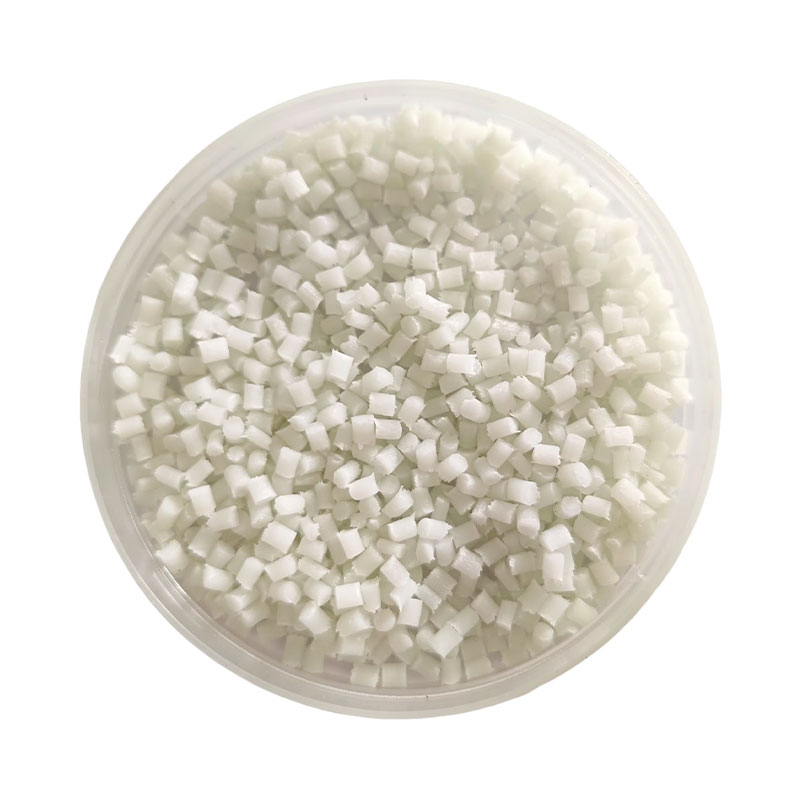 Custom Reduced friction and enhanced wear resistance PPA PTFE Plastic ManufacturZhejiang Lisu Composite Materials Co., Ltd is China Custom Reduced friction and enhanced wear resistance PPA PTFE Plastic manufacturers a...View Product →
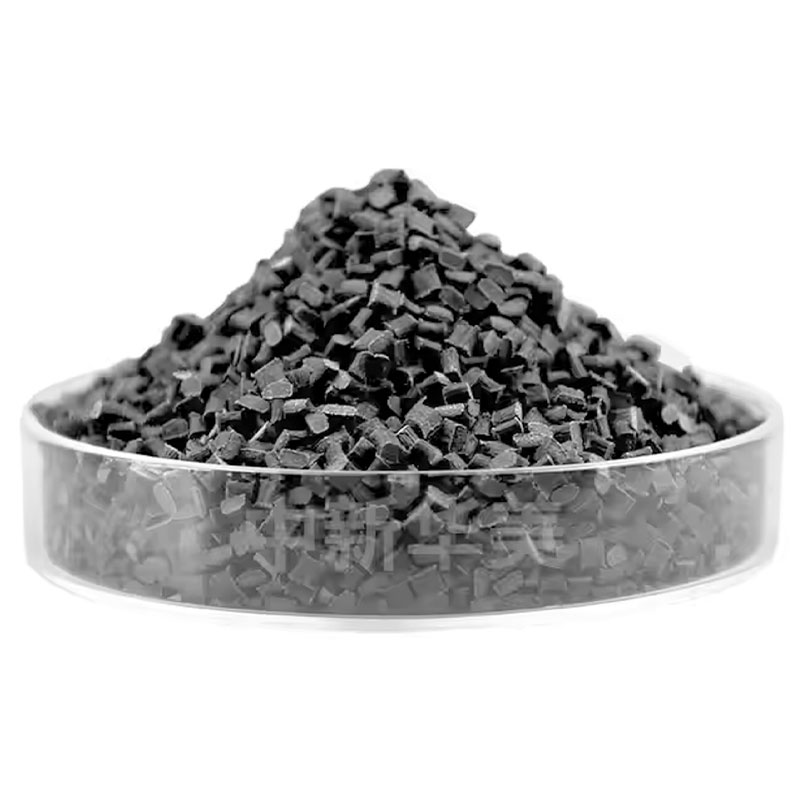 Custom Dimensionally stable and conductive PPA CF20 Plastic Manufacturers, FactoZhejiang Lisu Composite Materials Co., Ltd is China Custom Dimensionally stable and conductive PPA CF20 Plastic manufacturers and factory...View Product →
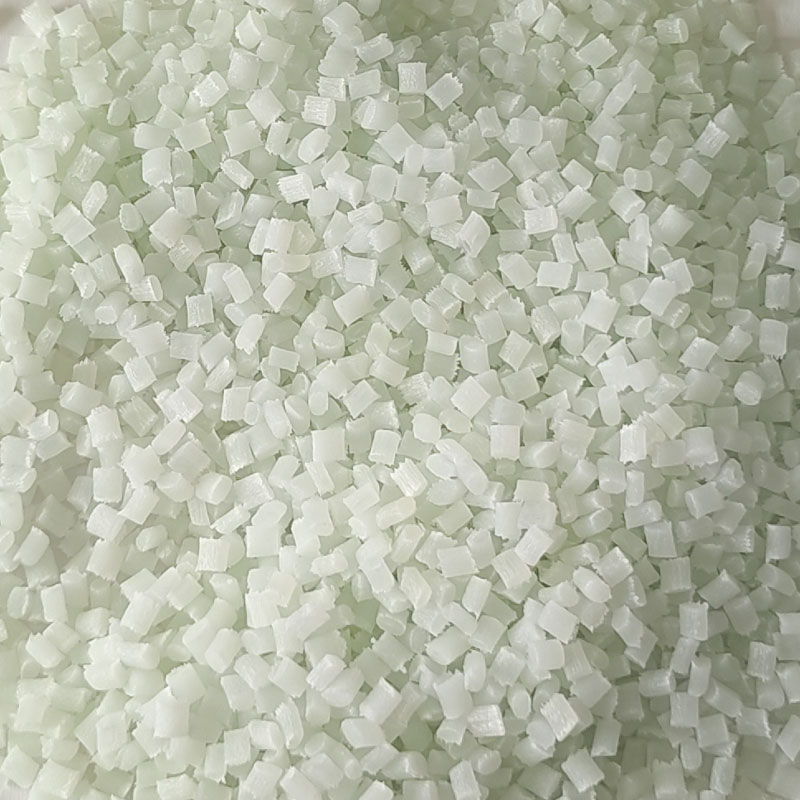 Custom Heat-resistant PPA GF30 Plastic Manufacturers, FactoryZhejiang Lisu Composite Materials Co., Ltd is China Custom Heat-resistant PPA GF30 Plastic manufacturers and factory,PPAFull name: Polyph...View Product →
Where Modified PPA Pellets Deliver the Most Value
Automotive remains the largest market for modified PPA. Connectors, solenoid housings, turbocharger sensors, and transmission components depend on PPA because it retains its mechanical properties in continuous engine heat and oil contact. Electrification adds more demand: high-voltage connectors, busbar insulators, and battery module frames sit close to heat-generating cells, where PA66 loses retention force and PBT softens excessively.
In electronics, PPA is specified for parts that pass through lead-free reflow soldering at temperatures above 260°C. Surface-mount bobbins, relay bodies, and switch housings are typical. Industrial applications include pump impellers, valve seats, and bearing cages that face heat, chemicals, or both around the clock.
PPA also serves as a metal replacement. Swapping die-cast aluminum for a glass-reinforced compound can reduce component weight by 40-50% while keeping stiffness at operating temperature. The key is checking service temperature and fluid exposure first. An overview of the main uses of PPA plastic pellets across industries shows how widely this material family is applied.
Quick Reference: Choosing the Right Modified PPA Grade
Use the scenarios below as a starting point during material selection. Always confirm the candidate grade against actual service conditions and supplier datasheets before cutting tooling.
Continuous heat above 150°C
Choose PPA-GF30 or a higher-fill glass grade, then verify long-term aging data at the target temperature.
Tight tolerances in humid environments
Carbon-fiber or mineral-filled grades minimize moisture-driven dimensional change.
Electrostatic discharge risk
A carbon-fiber compound such as PPA-CF20 provides conductive surface resistivity while keeping warpage low.
Sliding contact without lubrication
Use a PTFE-modified grade to reduce friction and protect the mating surface.
Hot oils and coolants
Confirm fluid compatibility with the specific grade; not every PPA compound resists every fluid equally.
Metal replacement for structural parts
Look for glass-reinforced grades with published creep and fatigue data at the part operating temperature.
Processing Guidelines for Modified PPA Pellets
Modified PPA runs on standard injection molding machines, but the high melt temperature and crystalline nature of the material call for discipline. Follow these steps to avoid the most common defects:
- Dry the pellets. PPA is moisture-sensitive in pellet form. Dry at 110-120°C for 4-6 hours to reach a moisture level below 0.06% before processing.
- Set the barrel temperature. Melt temperatures of 310-340°C are typical. Use the lower end for thin-wall parts to limit over-shear, and the upper end for heavily filled grades.
- Hold the mold temperature at 120-160°C. This range ensures complete crystallization and a reproducible surface finish; colder molds reduce mechanical properties.
- Apply holding pressure of 60-80 MPa. This counteracts sink marks on thick sections. Because PPA crystallizes quickly, gate freeze-off is fast, so pack the cavity early.
- Vent the mold properly. Vent depths of 0.01-0.02 mm prevent gas burns caused by additive decomposition at high melt temperatures.
Frequently Asked Questions
Is PPA the same as nylon 66?
No. PPA is a semi-aromatic polyamide with aromatic rings in the backbone. It offers higher heat resistance, lower moisture absorption, and better creep resistance than PA66, but it is more expensive and needs higher processing temperatures.
What is the maximum continuous service temperature for modified PPA?
Glass-reinforced grades are commonly used at continuous temperatures of 150-180°C, depending on load, environment, and required service life. Short exposures up to 230-260°C are possible, but the specific grade must be validated against the application.
Can PPA be used as an electrical insulator?
Unfilled and glass-reinforced PPA grades have good dielectric properties and high CTI values, which is why they are widely used in connectors. Carbon-fiber-reinforced grades are conductive and should not be used as primary insulation.
Can modified PPA pellets be reground and reused?
Post-industrial sprue and runner scrap can often be reground and blended with virgin material at low percentages, but repeated thermal exposure reduces mechanical properties faster than in commodity polymers. Follow the supplier recommendation and validate the blend in a real part.
Modified PPA plastic pellets solve a specific but critical problem: holding dimensional accuracy, stiffness, and strength where commodity nylons fail. Start with the grade family that matches your binding constraint, whether that is continuous heat, humidity, electrostatic discharge, or unlubricated sliding. Then validate the candidate with actual samples under real service conditions before you commit to production tooling.