 EN
EN English
 中文简体
中文简体 Español
When a design calls for long-term performance in engine bays, down-hole tools, or dense electronic enclosures, standard nylon often falls short. You need a material that holds its stiffness well above 150°C, resists creep under constant load, and keeps tight tolerances through humidity swings. That is precisely the gap modified PPA plastic pellets are engineered to fill. Before you request a quote or approve a material change, it pays to understand the main modification routes, the specific performance trade-offs, and how to qualify a compounder that can deliver consistent, automotive-grade material.
What Are Modified PPA Plastic Pellets?
PPA, or polyphthalamide, is a semi-aromatic polyamide. Unlike standard nylon (PA66), a significant portion of its diacid building blocks are aromatic—typically terephthalic acid or isophthalic acid. For a polymer to be classified as PPA, at least 55% of the acid portion must be aromatic. This chemistry gives PPA a distinct advantage: it retains far more of its mechanical strength and stiffness at elevated temperatures than aliphatic nylons, and it exhibits superior creep resistance, chemical resistance, and dimensional stability.
The term "modified" is the crucial part. PPA in its pure form is rarely used. Almost every commercial grade is compounded with reinforcements or functional fillers—glass fiber, carbon fiber, PTFE, and others—to tailor the material for a demanding application. The modification step is what transforms a high-performance resin into a workable engineering solution that can replace metal parts in heat-exposed assemblies.
If you are weighing PPA against PA66, the core distinction is thermal capability. PA66 grades are typically rated for continuous use around 80–150°C, depending on the heat stabilization package. PPA, depending on the specific copolymer system (such as PA6T/66, PA6T/DT, or PA6T/6I), can handle significantly higher continuous service temperatures with much better retention of stiffness at the upper end of the range. Homopolymer PA6T has a melting point around 371°C, but commercial grades use co-monomers to lower the melting point into a processable range while still retaining a high heat deflection temperature. This makes modified PPA the logical "step-up" material for applications pushing the limits of standard nylon.
Why Modify PPA Plastic Pellets?
The short answer: pure PPA lacks the structural stiffness and wear characteristics required for most industrial parts. While its inherent heat resistance warrants consideration, the base resin is too brittle and too expensive to use straight from the reactor. Modification is where the material earns its keep.
Each type of additive or filler addresses a specific limitation:
- Glass fiber reinforcement dramatically improves tensile strength, flexural modulus, and heat deflection temperature. It makes PPA a true metal-replacement candidate for structural and load-bearing components.
- Carbon fiber reinforcement offers even higher stiffness-to-weight ratios and, critically, provides electrical conductivity and static dissipation—properties glass fiber cannot deliver. This is essential for fuel system components and electronic housings where static discharge is a safety hazard.
- PTFE or molybdenum disulfide (MoS₂) fillers introduce a low-friction, self-lubricating quality to the polymer matrix. This reduces wear in sliding, reciprocating, or rotating applications without the need for external lubrication systems.
The modification step is also the point where a compounder can tailor a formulation for a specific process. Whether you need a high-flow grade for thin-wall connectors or a high-stiffness grade for structural brackets, the pellet composition defines your processability and part performance. This is why the conversation about high-performance plastic pellets as core material solutions usually starts with the modification strategy, not just the base polymer.
Common Types of Modified PPA Plastic Pellets
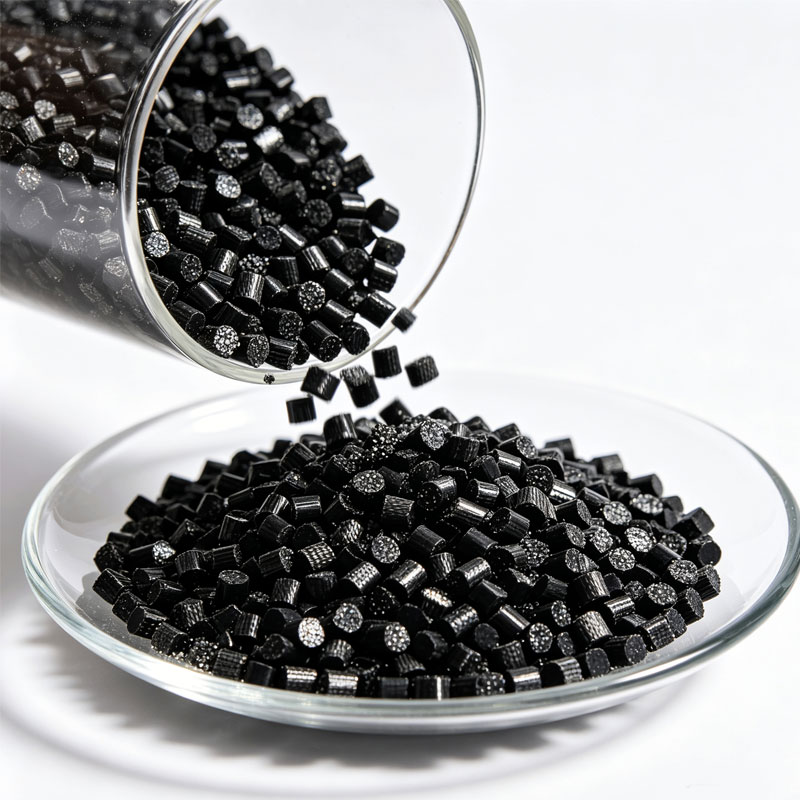
The most common modification routes in the industry fall into three distinct families. To see how these are positioned in a real product portfolio, you can explore our modified PPA plastic pellet grades. Below is a breakdown of each type, its intended use, and what you should expect in terms of performance.
Glass Fiber Reinforced PPA (PPA-GF)
This is the workhorse of the PPA family. Glass fiber reinforced grades, such as the widely used PPA-GF30, deliver an outstanding combination of high temperature resistance, high rigidity, and excellent dimensional stability. The glass fiber provides the mechanical backbone that PPA lacks on its own, enabling parts to hold their shape and strength under continuous heat and mechanical load.
Typical applications include automotive powertrain components like oil pans and engine covers, high-temperature electrical connectors, pump housings, and cooling system parts. If your design is in an under-hood environment where standard nylon fails, a PPA-GF grade is often the first specification to evaluate. For a specific high-heat formulation, look at our PPA-GF30 high-heat plastic pellets as a benchmark for what a 30% glass-filled PPA can achieve in terms of thermal and mechanical performance.
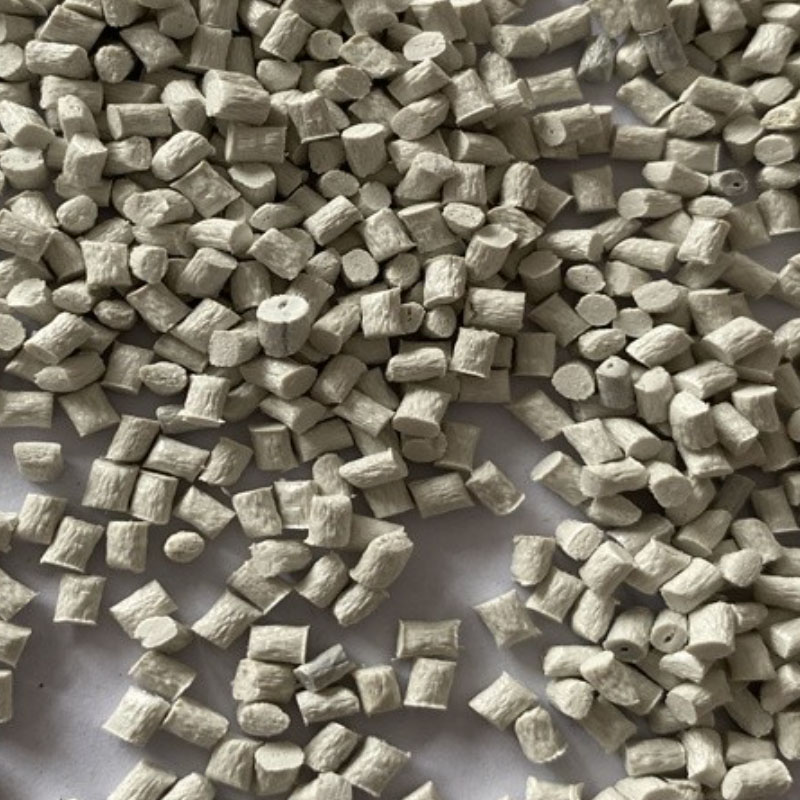
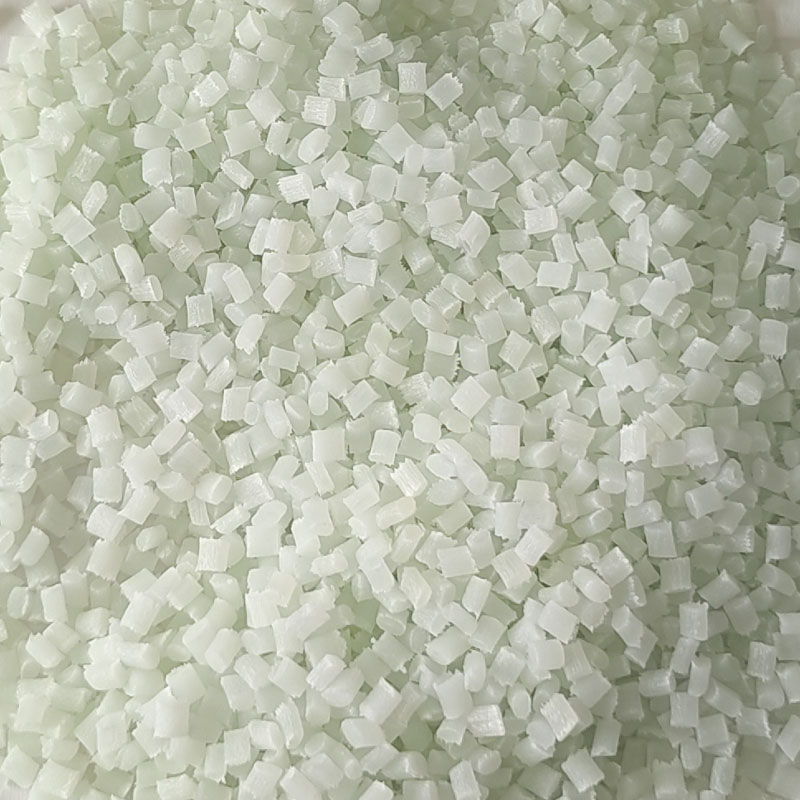 Custom Heat-resistant PPA GF30 Plastic Manufacturers, FactoryZhejiang Lisu Composite Materials Co., Ltd is China Custom Heat-resistant PPA GF30 Plastic manufacturers and factory,PPAFull name: Polyph...View Product →
Carbon Fiber Reinforced PPA (PPA-CF)
When the application requires more than just stiffness, carbon fiber reinforced PPA is the route to consider. The addition of carbon fiber not only pushes the modulus higher than glass fiber equivalents but also provides inherent electrical conductivity and antistatic properties. This makes PPA-CF grades critically important in environments where electrostatic discharge (ESD) can damage sensitive electronics or ignite flammable vapors.
PPA-CF is also a better choice for lightweighting. Carbon fiber has a lower density than glass fiber, so a part made with a CF-reinforced grade will weigh less while potentially offering even greater rigidity. This combination of low weight, high stiffness, and conductivity makes it suitable for structural components in electronic devices, printer shafts, and fuel system parts. For an application demanding these exact properties, the dimensionally stable conductive PPA-CF20 pellets offer a recognized balance of structural integrity and static dissipation.
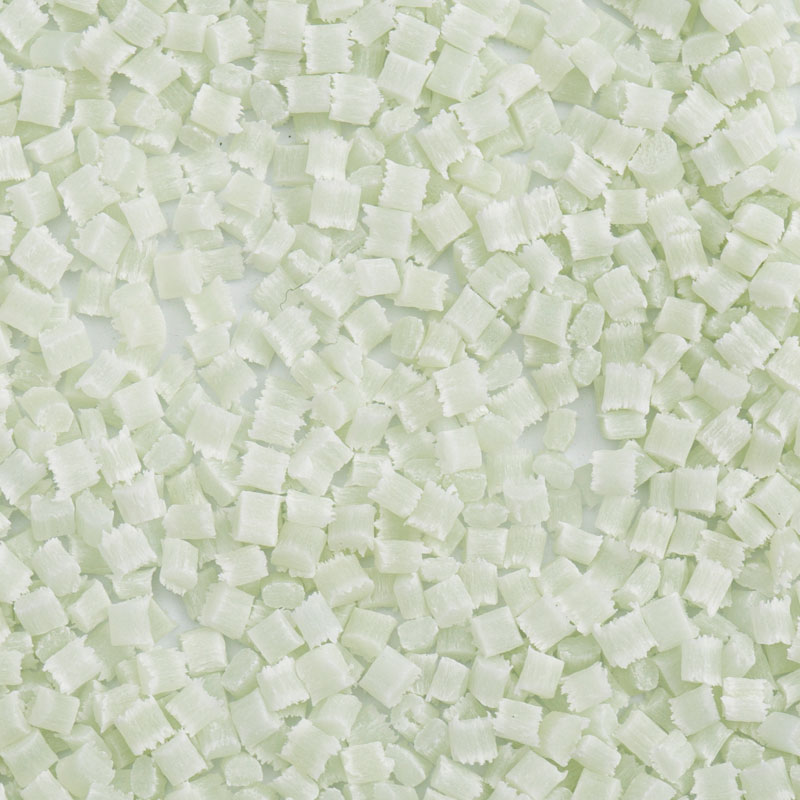
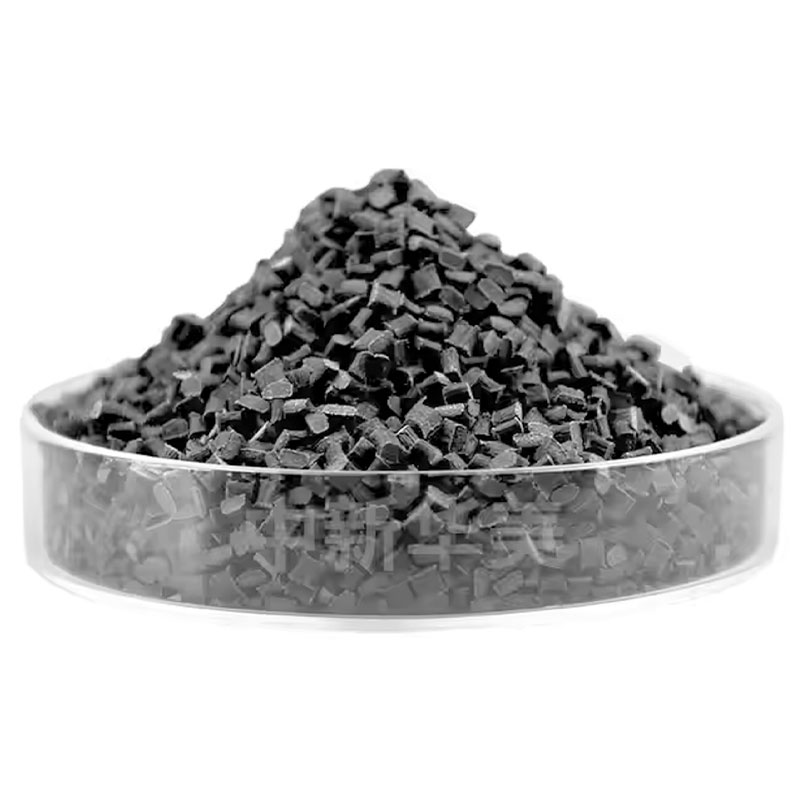 Custom Dimensionally stable and conductive PPA CF20 Plastic Manufacturers, FactoZhejiang Lisu Composite Materials Co., Ltd is China Custom Dimensionally stable and conductive PPA CF20 Plastic manufacturers and factory...View Product →
Wear-Resistant PPA with PTFE or MoS₂
In sliding and contact applications, friction is the enemy of component life. Modifying PPA with internal lubricants such as PTFE or molybdenum disulfide (MoS₂) substantially lowers the coefficient of friction and enhances wear resistance. This approach often eliminates the need for external grease or oil, which is advantageous for maintenance-free designs or enclosed mechanisms.
These wear-modified grades are essential for precision gears, bushings, slides, and bearing cages. The PTFE filler creates a micro-film between the mating surfaces, reducing heat generation and noise during operation. The result is a longer-lasting component with more consistent performance over its lifetime. For components operating under continuous sliding contact, our low-friction wear-resistant PPA-PTFE plastic grade is formulated to address these exact wear challenges.
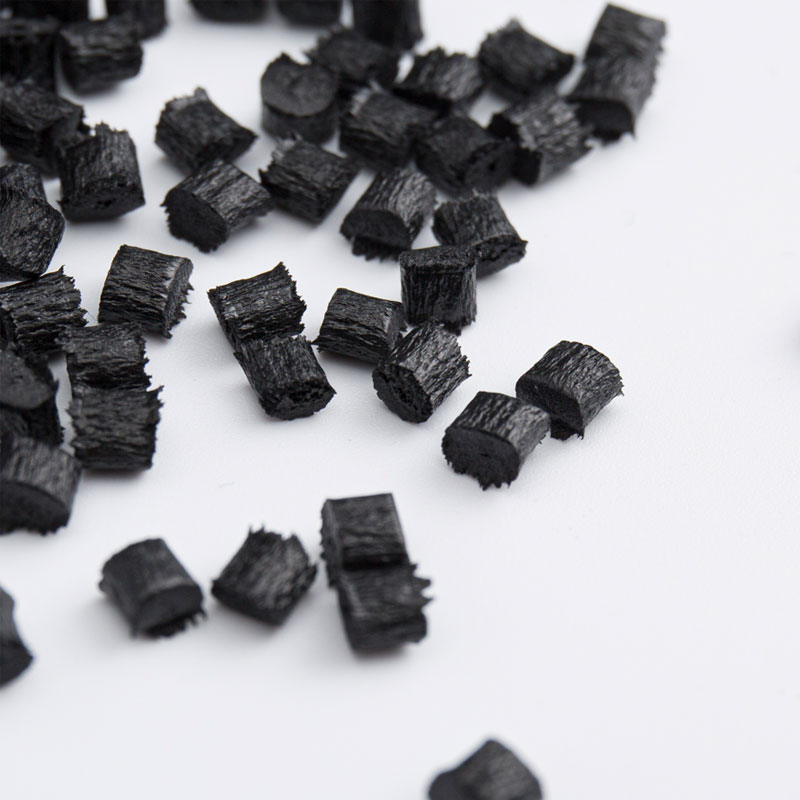
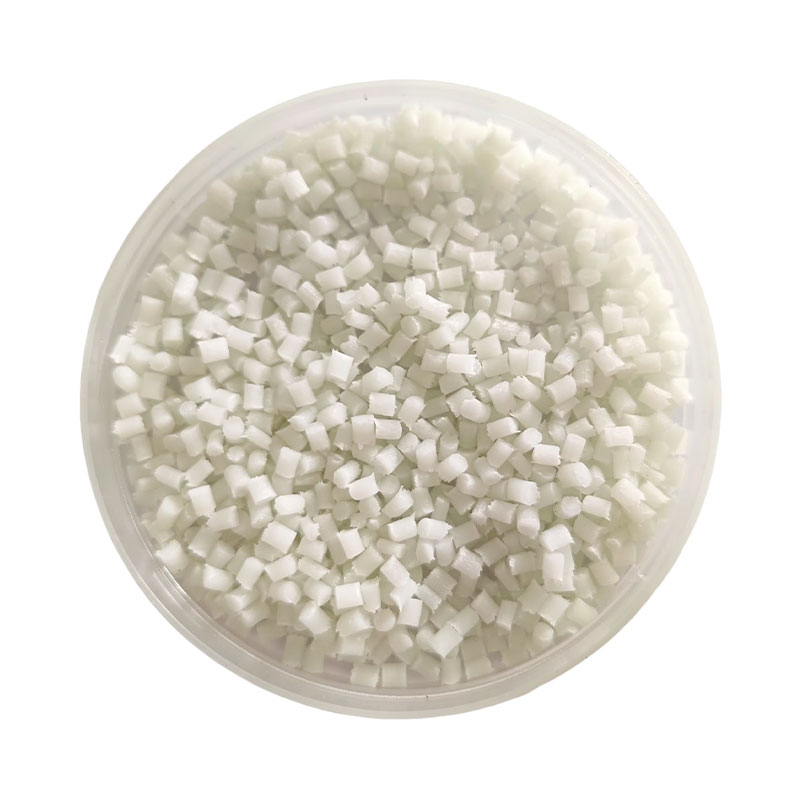 Custom Reduced friction and enhanced wear resistance PPA PTFE Plastic ManufacturZhejiang Lisu Composite Materials Co., Ltd is China Custom Reduced friction and enhanced wear resistance PPA PTFE Plastic manufacturers a...View Product →
Key Applications of Modified PPA Plastic Pellets
Modified PPA pellets have established a strong foothold across multiple industries, primarily as a metal replacement to save weight and cost while maintaining structural integrity in harsh thermal environments. Understanding where the material fits best helps you identify the right specification early in the design phase.
Here is a breakdown of the most active sectors:
| Industry | Common Application | Primary Requirement Met |
|---|---|---|
| Automotive | Transmission components, engine covers, fuel rail, EGR valves | High heat resistance, dimensional stability, chemical resistance |
| Electrical & Electronics | Connectors, sensor housings, relay bases, switch components | High heat performance during reflow soldering, low moisture absorption |
| Industrial Machinery | Pump impellers, valve seats, gears, bearing cages | Wear resistance, high stiffness, long-term creep resistance |
| Consumer Goods | Small engine components, power tool housings, kitchen appliances | Heat resistance, aesthetic surface finish, durability |
It is helpful to position PPA within the broader high-temperature plastics landscape. Compared to polyphenylene sulfide (PPS), PPA generally offers better impact resistance and higher elongation, with a similar continuous-use temperature for certain grades. Against polyether ether ketone (PEEK), PPA is significantly more cost-effective, though it cannot match PEEK's extreme high-temperature ceiling and universal chemical resistance. For many automotive and electronic applications, PPA offers the most balanced cost-performance ratio, delivering "enough" heat resistance and mechanical strength without the premium price tag of PEEK. When the application demands even higher performance, you might consider high-performance PEEK plastic alternatives, but for a wide range of parts, modified PPA remains the most commercially viable choice.
How to Choose a Modified PPA Pellet Supplier
Selecting the right compounder is as critical as selecting the right material. A PPA pellet is not a commodity; its performance is heavily dependent on the quality of the dispersion, the consistency of the filler, and the control of the compounding process. When you begin evaluating suppliers, we recommend a structured assessment across four key dimensions.
Compounding Capability and Customization
Your application may not fit a standard off-the-shelf grade perfectly. A supplier with robust in-house customization capability—from formulation design through small-scale trials to mass production—is enormously valuable. They should be able to adjust filler loadings, add stabilizers, or modify flow characteristics to meet your specific injection molding requirements. Confirming that a potential supplier can manage this full development chain is a strong indicator of their technical depth. The ideal partner will treat your application as a development project, not just a sales transaction.
Quality Management Systems and Industry Certifications
Certifications are the first filter for reliability. For automotive projects, requiring IATF16949 certification is non-negotiable. It signals that the supplier's production processes meet global automotive quality standards, including rigorous process control and traceability. If your project involves sustainability goals or a requirement to use recycled content, also verify the supplier holds GRS (Global Recycled Standard) certification. This confirms they can provide traceable, certified recycled materials without compromising the performance of the final part.
Process Consistency and Batch-to-Batch Control
In high-volume injection molding, a subtle shift in the melt flow index (MFI) between batches can cause dimensional variation or short shots. A reliable supplier employs automated, precise dosing systems and full online monitoring during the compounding process. This level of control—using online process parameter monitoring—ensures that every lot you receive matches the last. Ask about their process control strategy and what traceability documentation they provide with each shipment. Consistency is the foundation of a low scrap rate in your own molding operation.
Scale and Supply Stability
A compounder with limited capacity may struggle to support you as your production volumes ramp up. Evaluate their manufacturing scale and supply chain robustness. A stable supply partner should have the capacity to handle large-volume orders without dramatic lead time fluctuations, and they should be willing to commit to long-term supply agreements. This is particularly important for large OEMs where a material change is a costly and time-consuming process—you need to be confident the material will be available for the life of the program.
Conclusion
Modified PPA plastic pellets bridge the gap between standard nylons and exotic high-temperature plastics. By selecting the right modification—whether glass fiber for stiffness, carbon fiber for conductivity, or PTFE for wear—you can engineer a part that survives in environments where ordinary thermoplastics fail. The material's inherent heat resistance and dimensional stability make it the first choice for automotive under-hood parts, electrical connectors, and industrial mechanisms.
Before you finalize a specification, look beyond the datasheet. Partner with a supplier that holds IATF16949 and GRS certifications, provides transparent process control, and offers the flexibility to customize a formulation for your tool and application. Contact a knowledgeable compounder to discuss your specific use case and request samples for internal testing. The right material choice—and the right supplier—will protect your project timeline and your part's performance for years to come.