 EN
EN English
 中文简体
中文简体 Español
Why PEEK Plastic Stands Above Other Polymers
PEEK plastic represents the pinnacle of engineering thermoplastic technology, offering an unmatched combination of thermal stability, mechanical strength, and chemical resistance. Unlike commodity plastics that fail under demanding conditions, PEEK maintains its structural integrity at continuous service temperatures approaching 260°C while simultaneously providing excellent wear resistance and low friction characteristics. This unique property profile makes it the material of choice for applications where failure is not an option, from life-saving medical implants to critical aerospace components operating in extreme environments.
Key Insight: When traditional plastics cannot meet performance requirements and metal components are too heavy or prone to corrosion, PEEK plastic emerges as the optimal engineering solution, justifying its premium cost through extended service life and reduced maintenance requirements.
Fundamental Properties of PEEK Plastic
Polyetheretherketone, commonly known as PEEK, belongs to the polyaryletherketone family of high-performance polymers. Its semi-crystalline molecular structure creates a material that exhibits both stiffness and toughness, properties that often conflict in polymer science. The aromatic backbone chain provides inherent thermal and chemical stability, while the flexible ether linkages contribute to processability.
Thermal Performance
- Melting point near 343°C
- Glass transition at 143°C
- Continuous use at 260°C
Mechanical Strength
- Tensile strength exceeds 90 MPa
- Excellent fatigue resistance
- Superior creep resistance
The crystallinity level of PEEK typically ranges between 20-35%, and this can be controlled through processing parameters to optimize properties for specific applications. Higher crystallinity improves chemical resistance and mechanical properties at elevated temperatures, while lower crystallinity enhances impact strength and transparency.
Chemical Resistance Capabilities
One of the most valuable characteristics of PEEK plastic is its exceptional resistance to a wide range of chemicals, including many that rapidly degrade other polymers. This resistance stems from the stable aromatic molecular structure that does not readily react with aggressive substances.
Substances PEEK Resists Effectively
Hydrocarbons: Oils, fuels, lubricants
Acids: Dilute and concentrated varieties
Steam: High-pressure water vapor
Solvents: Most organic solvents
In practical terms, components manufactured from PEEK can operate continuously in aggressive chemical environments where metals suffer corrosion and other plastics experience swelling, cracking, or dissolution. This chemical inertness, combined with thermal stability, enables PEEK to replace stainless steel and exotic alloys in many chemical processing applications.
Medical and Healthcare Applications
The medical industry has embraced PEEK plastic as a biocompatible material for long-term implantable devices. Its mechanical properties closely match those of human cortical bone, eliminating the stress shielding problems associated with metallic implants. Regulatory agencies worldwide have approved specific PEEK grades for permanent implantation.
| Material | Elastic Modulus (GPa) | Density (g/cm³) | Radiolucency |
| Titanium Alloy | 110 | 4.5 | Opaque |
| Stainless Steel | 200 | 7.9 | Opaque |
| PEEK Plastic | 18-20 | 1.3 | Transparent |
| Cortical Bone | 18-20 | 2.0 | Transparent |
Spinal fusion cages, trauma fixation devices, and dental abutments represent common medical applications where PEEK's radiolucent properties allow clear post-operative imaging without artifact interference. Surgeons can monitor bone healing through radiographs without the shadowing that metallic implants produce.
Aerospace and Aviation Uses
In aerospace engineering, every gram of weight savings translates directly to fuel efficiency improvements and extended range capability. PEEK plastic components weigh approximately 70% less than equivalent steel parts while maintaining necessary structural performance. This weight advantage has driven extensive adoption throughout aircraft systems.
Critical Aerospace Components Using PEEK:
Wire insulation sleeves Fuel system bushings Cabin interior brackets Hydraulic seals Bearing cages Thermal shields
Interior cabin components benefit from PEEK's flame, smoke, and toxicity compliance requirements without additional flame retardant additives that can compromise other properties. The material meets stringent aerospace specifications for fire safety while maintaining mechanical integrity under thermal exposure.
Industrial and Automotive Implementations
The demanding environments within automotive powertrains and industrial machinery create ideal applications for PEEK plastic components. High-temperature underhood conditions, aggressive lubricants, and continuous mechanical stress exceed the capabilities of commodity engineering plastics.
Automotive Powertrain Applications
Modern engine compartments reach temperatures that would melt conventional plastics. Turbocharged engines, exhaust gas recirculation systems, and continuously variable transmissions all contain components exposed to temperatures exceeding 150°C while under mechanical load. PEEK thrives in these conditions, enabling weight reduction and design freedom impossible with metal alternatives.
- Throttle body components exposed to intake air temperatures
- Transmission bushings operating in hot lubricant environments
- Sensor housings requiring dimensional stability
- Seal rings maintaining integrity under thermal cycling
- Wear pads in variable valve timing systems
Processing Methods and Considerations
Successfully manufacturing PEEK plastic components requires specialized processing equipment and carefully controlled conditions. The high processing temperatures necessitate industrial-grade molding machinery with adequate heating capacity and temperature uniformity throughout the melt.
Injection Molding Parameters
Melt temperatures range from 360-400°C with mold temperatures between 160-200°C. Proper drying at 150°C for several hours before processing prevents hydrolytic degradation during molding.
Extrusion Conditions
Profile extrusion, wire coating, and film production operate at similar melt temperatures, requiring barrel zones capable of sustained high-temperature operation without degradation.
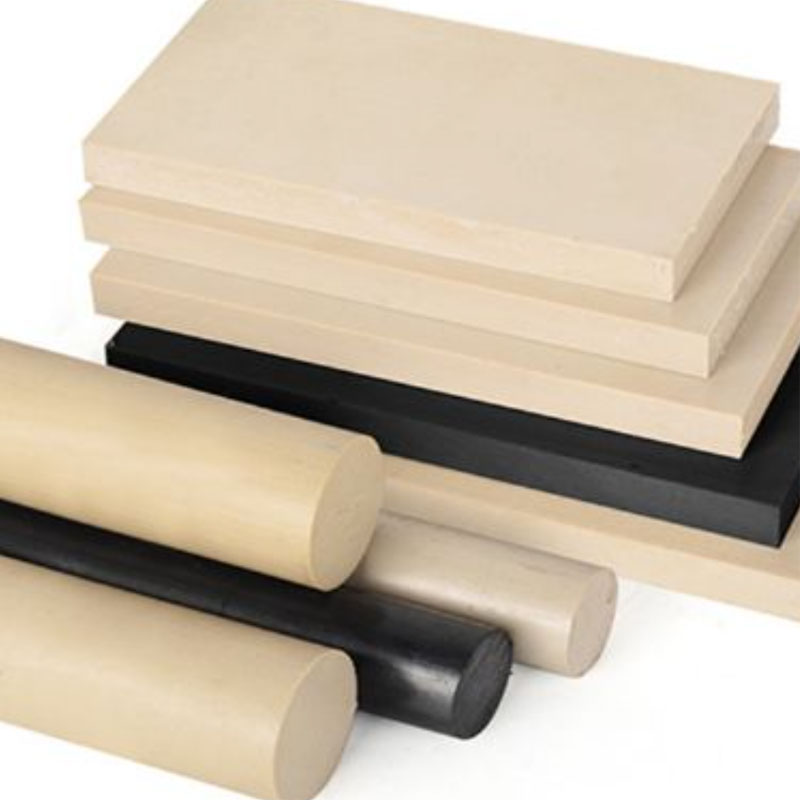
Machining PEEK is straightforward using standard metalworking tools and techniques. The material cuts cleanly without burring, allowing precise dimensional control for tight-tolerance components. Annealing before machining relieves internal stresses and prevents warpage during subsequent machining operations.
Comparative Advantages Over Alternative Materials
Understanding when PEEK plastic justifies its premium cost requires comparison with competing materials across relevant performance metrics. The total cost of ownership often favors PEEK despite higher initial material expenses.
| Property | PEEK | PEI | PPS | PAI |
| Max Continuous Use (°C) | 260 | 170 | 220 | 260 |
| Tensile Strength (MPa) | 90-100 | 105 | 70 | 120 |
| Chemical Resistance | Excellent | Good | Excellent | Good |
| Processability | Good | Good | Fair | Difficult |
Limitations and Design Considerations
Despite its impressive property profile, PEEK plastic presents certain limitations that designers must acknowledge. Understanding these constraints prevents application failures and ensures appropriate material selection.
Primary Design Considerations:
Cost Factor: PEEK ranks among the most expensive thermoplastics, with prices significantly higher than standard engineering polymers. Applications must justify this premium through performance requirements.
The material's relatively low impact strength at room temperature compared to toughened polymers requires careful design for shock loading applications. Additionally, certain concentrated acids and bases at elevated temperatures can attack PEEK, necessitating compatibility verification for chemical exposure applications.
Ultraviolet stability represents another consideration for outdoor applications. While PEEK exhibits better UV resistance than many polymers, prolonged outdoor exposure without stabilization can cause surface degradation and color change.
Future Development Trajectory
Research and development efforts continue expanding PEEK plastic capabilities through composite formulations and processing innovations. Carbon fiber reinforcement significantly enhances mechanical properties while reducing thermal expansion, enabling applications previously requiring metallic materials.
Emerging Application Areas:
Additive manufacturing filaments
Oil and gas downhole components
Electric vehicle battery housings
Semiconductor manufacturing parts
Food processing equipment
As processing technologies mature and production volumes increase, economies of scale gradually reduce costs, opening new application territories previously uneconomical for high-performance polymers. The combination of regulatory approval for additional medical applications and growing demand for lightweight, durable materials ensures continued market growth for PEEK-based solutions.